How to repair a washing machine
A washer that will not drain, spin, or finish a cycle usually fails in a part you can see before anyone opens the cabinet.
A front-load washer, from the top down. The blue numbers match the list. Brands move these parts.
- Top panel. The cover across the top.
- Detergent drawer. The small tray at the front of that panel.
- Door. The round window on the front.
- Gasket. The rubber ring you see when the door is open.
- Drum. The basket the clothes sit in.
- Cabinet. The outer box. This drawing does not open it.
- Drain hose. The hose at the back that empties the tub.
- Leveling foot. One of the feet under the cabinet. A washer that walks is often this, or the load.
Start with the load, the drain hose, and the lock. A washer that sits full of water is a drain problem. A washer that empties and then will not spin is often a balance, lid, or door-lock problem. A washer that will not fill is a supply problem. Those three splits decide the next ten minutes.
Unplug the machine or switch off its breaker before you move it. Shut the hot and cold taps if you disconnect a hose. Keep children away from a tub of standing water. Do not bypass a lid switch or door lock to force a spin. Those switches exist so the basket cannot turn while a hand is in the way.
What you can check without a parts order
- The drain hose is not kinked, and it is not shoved airtight into the standpipe. Many install guides call for a standpipe height around 39 inches. Use the height printed in your install guide.
- The coin filter, if your front-loader has a small door at the bottom front. Open it slowly. Water will come out. Many top-loaders do not have this door.
- The hot and cold inlet screens, if the tub is not filling. A clogged screen looks like a failed valve.
- The load itself. One heavy towel on one side will pause or refuse a spin.
- Shipping bolts on a new washer. Samsung and LG manuals tell you to remove them before the first wash. Other brands do the same. A bolt left in place makes a new machine walk and stall.
How brand guides differ
The shared checks above are the right first pass. After that, the display and the lock behave differently. Use the brand guide rather than a generic spin procedure:
- Washer not draining for the symptom across brands.
- Whirlpool washer not draining, including the F9 E1 drain code used on many Whirlpool washers.
- GE washer not draining, including what a power reset can and cannot clear.
- Whirlpool washer not spinning.
- Samsung washer not spinning.
- How to clean a washing machine, an empty hot cycle, not a leak repair.
- LG washer OE code. Many current LG manuals list OE as a drain error. Confirm it on your model.
- Washer not filling with water.
- Washing machine shaking violently.
Codes such as 4C, 5C, UE, OE, and dE belong to specific brands. They are explained in those guides and in the error code library. Do not treat a Whirlpool F-code as an LG code.
Keeping the washer out of the guide
Use the amount of detergent the manual names, not the cap on the bottle. Too many suds will pause a cycle and look like a drain failure. Leave the door or lid ajar after a cycle so the gasket can dry. Wipe the door boot on a front-loader. Check pockets. A coin in the pump is a common reason a washer will not empty. More of this lives on the appliance maintenance checklist.
Guides in this section
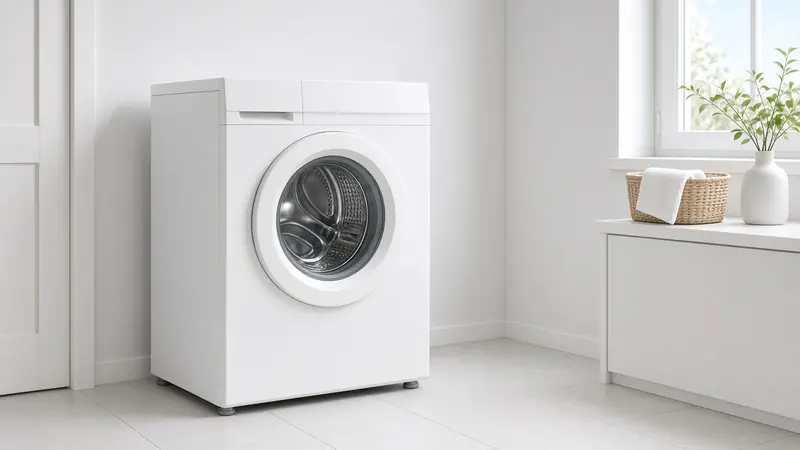
How to clean a washing machine
How to clean a washing machine is an empty drum, the cleaner your manual names, and one hot cycle.
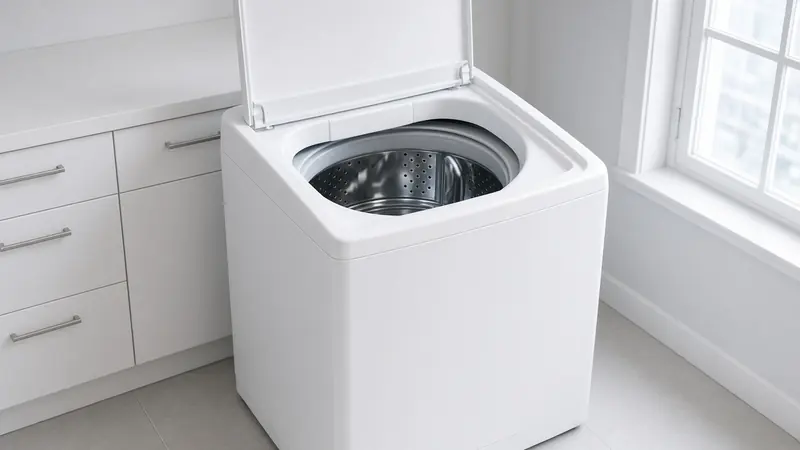
Washer not draining: find whether the pump, the hose, or the suds stopped
A washer not draining leaves dirty water in the tub after the cycle should have emptied it.
LG washer OE code
An LG washer OE code, on many current LG manuals, means the washer did not drain in the time that model allows.
Whirlpool washer not spinning: lock, drain, and load before any coupling talk
A whirlpool washer not spinning usually has not been allowed to spin.
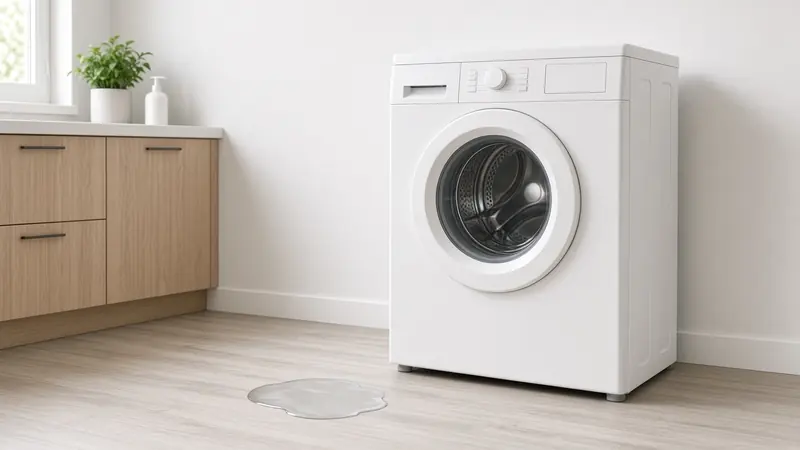
Washing machine leaking from bottom: sort it by fill, wash, or spin
A washing machine leaking from bottom should be sorted by when the water appears.
Whirlpool washer not draining: F9 E1, suds, and the hose
A Whirlpool washer not draining on many current models stores F9 E1, the long-drain code.
GE washer not draining: the unplug reset and the real clog
A GE washer not draining is not fixed by borrowing another brand's drain code.
Samsung washer not spinning: door, suds, drain, and balance
A Samsung washer not spinning usually shows a code you should confirm in the manual for that model.
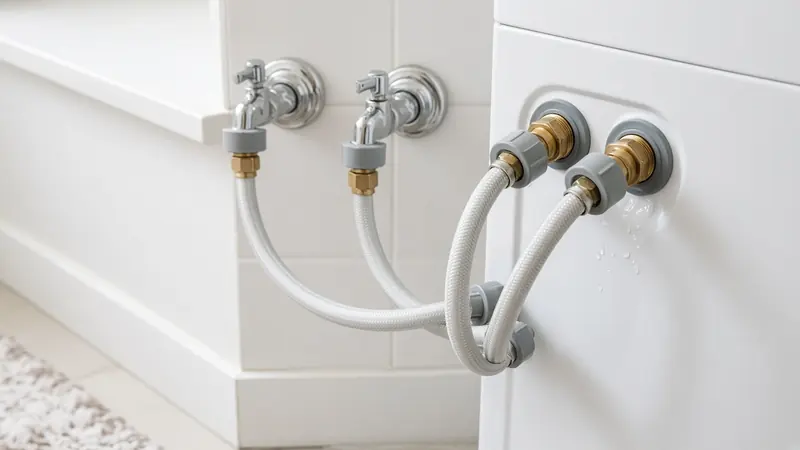
Washer not filling with water
A washer not filling with water is a supply problem until you prove the taps are open and the hoses are clear.
Washing machine shaking violently
A washing machine shaking violently on spin is usually the load, the feet, or shipping bolts that were never removed.