On this page
A Whirlpool washer not draining is, on many current Whirlpool washers, a long drain that the control records as F9 E1. Confirm F9 E1 in the manual for your exact model. Whirlpool's owner pages at Whirlpool Product Help list what that model stores. Other codes on many of the same washers are F8 E1 for low or no fill, Sud for excess suds, and dL when the lid or door is not locked. Those names also have to match your manual. A GE blink pattern is a different brand's system, described in GE washer not draining, and it should not be used on this machine.
Why is my Whirlpool washer not draining
Why is my Whirlpool washer not draining is usually answered by what is still in the tub. A tub full of water after the cycle tried to end is a blocked path or a pump that cannot push. A Whirlpool washer not draining completely is a narrower case: an inch or so of water may be normal on some front-loaders that keep the seal wet, and the manual says so. A basket you could still wash in is not that leftover film. Look up the leftover amount for your model before you pull the hose.
Kinked hoses, a standpipe that is too high, and a hose jammed airtight into the pipe look similar on most brands. That shared path is covered in washer not draining. Come back here for Whirlpool's codes, the coin-trap door, and the Sud pause. Install guides often want the standpipe about 39 inches high and not sealed airtight. Use the height printed in your own Whirlpool install guide, not a neighbor's number.
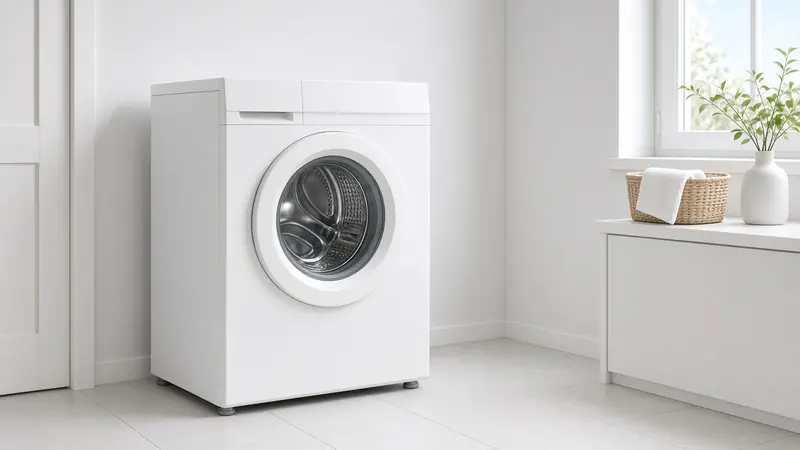
When the washer will not spin either
A Whirlpool washer not draining or spinning is often one fault. Many models refuse to spin while water is still in the tub, so a failed drain shows up as a basket that never reaches spin speed. Clear the drain, run a drain-and-spin or the shortest rinse your manual allows, and only then judge the spin. If the tub empties and the basket still will not turn, move to Whirlpool washer not spinning. On older Whirlpool direct-drive washers a failed motor coupling can let the motor hum while the basket does not spin. Newer Whirlpool washers are built differently. Do not take one teardown and apply it to every cabinet.
Sud is the other Whirlpool pause. Too much detergent, or detergent that is not HE on a high-efficiency tub, builds foam the pump cannot move. The display may show Sud on many models. Add nothing. Let the foam settle, then run a rinse with no detergent. Scoop excess suds out only if the manual tells you the lid may be opened at that point. Do not pour extra water into a tub that is already at the rim.
| What you notice | Likely cause | Safe check |
|---|---|---|
| F9 E1, tub still full | Long drain: hose, standpipe, trap, or pump | Confirm the code in the manual, then check the hose and trap |
| Sud on the display, foam in the tub | Excess suds blocking the pump | Stop adding detergent and run a rinse after the foam drops |
| dL, lid or door not locked | Lock did not engage, so the cycle cannot finish | Clear the latch area. Do not bypass the lock |
| An inch of water, manual calls it normal | Designed leftover on some front-loaders | Compare with the manual before treating it as a clog |
| Hose beaten flat behind the washer | Kink or a standpipe that is too high | Reseat the hose at the height printed in the install guide |
| Grind from the pump, then silence | Object in the pump | Use the coin trap if the manual shows one. Otherwise stop |
A safe drain check
Read the code, then unplug
Write down F9 E1, Sud, or dL if one of those is showing, and confirm the letters in your manual. Unplug the washer. Shut the water supply if you will move the machine. A live pump and a wet floor are a bad pair.
Check suds before you open a trap
If the tub is foam rather than gray water, the Sud path comes first. Wait, then rinse with no detergent. HE detergent, measured, is what these washers expect. A second cap of soap will bring the code back.
Reseat the drain hose
Pull the washer out only if you can do it without stretching the hoses. The drain hose should rise to the standpipe height in your install guide, often about 39 inches, and the end should not be taped airtight into the pipe. Take out kinks. If the standpipe itself is clogged, that is a plumbing stop, not a pump replacement.
Open a coin trap only if the manual shows one
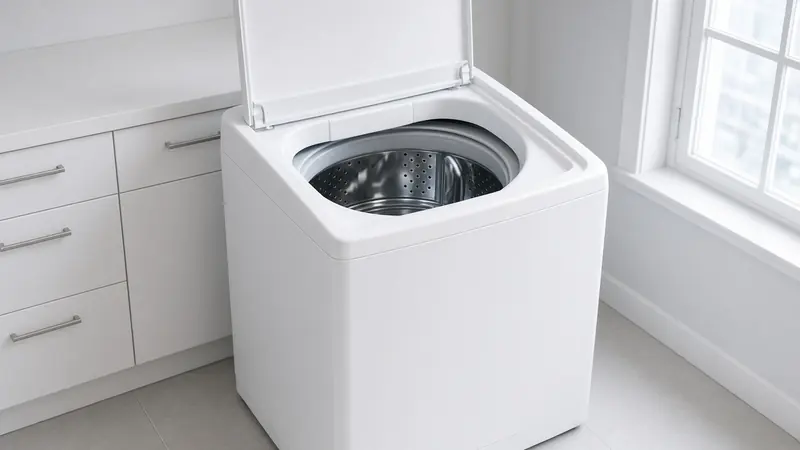
Many front-load Whirlpool washers have a lower door and a small hose or cap. Open it slowly. Water spills. Have a pan and towels ready. Remove coins and buttons. Many top-loaders do not have that door. If you do not see the door the manual draws, do not pry the cabinet open.
Run one drain test
Plug the washer back in. Start the drain-and-spin or rinse cycle the manual names. Stay nearby. If F9 E1 returns and the tub is still full, the remaining fault is the pump or a clog you cannot see. Stop. If the tub empties and spin is still missing, use the spinning guide.
Washer guides for other brands and symptoms are grouped under washing machines. Code names that this site will actually discuss are indexed at error codes, and only the codes named above should be read onto a Whirlpool washer, after the manual agrees.
Notes for the service call
Record the model number from the tag on the door frame or the rear top panel, the exact code, and whether the tub was full or only filmed with water. Say whether you found coins in a trap, foam from non-HE detergent, or a hose that had been pushed airtight into the standpipe. Say whether a later cycle drained and still refused to spin. That last fact sends the visit to the spin system instead of another hose inspection. Leave the washer unplugged if the floor is still wet.
Questions readers ask
What does F9 E1 mean on a Whirlpool washer?
On many Whirlpool washers F9 E1 means the drain took too long. Confirm it in the manual for your model, because a code sticker from a different series can lie. Check suds, the drain hose, the standpipe height printed in the install guide, and the coin trap if the manual shows a lower door. If the code returns after those are clear, the pump or a hidden clog needs a technician.
Why is there still a little water after the cycle?
Some front-load Whirlpool washers leave a shallow amount of water on purpose. The manual states the amount. A Whirlpool washer not draining completely, with enough water to cover the bottom of the basket and soak a new load, is a real drain fault. Check the hose and the trap. Do not call a puddle the manual allows a failed pump.
The washer will not spin and the tub is full. Which fails first?
Treat the drain first. Many Whirlpool washers will not spin until the water is gone, so a stuck drain looks like a dead spin. After a successful drain-and-spin, a basket that still will not turn is a spin problem. Older direct-drive models can hum from a failed motor coupling. Newer cabinets are different, so do not strip the motor based on an older machine.
Can I pour bleach or extra water in to make it drain?
Extra water raises the chance of an overflow, and bleach does not move a coin or a kinked hose. If the problem is Sud, more product makes it worse. Use the measured HE dose on the next load, after a rinse with no detergent. If the hose and trap are clear and F9 E1 remains, unplug the washer and call a technician.
My top-loader has no little door at the bottom. Did I miss it?
Many top-loaders do not have a coin-trap door. The manual's parts drawing is the check. If that door is not shown, do not remove the cabinet front. Look at the drain hose and the standpipe instead. A grind from under the tub, with no access door, is a pump obstruction for a technician with the service steps and the plug pulled.