On this page
A dryer not heating is one of the few laundry faults you can sort without opening the cabinet. Either the drum air gets hot or it does not. Brands differ on codes. They do not differ on lint, a blocked hood, or an electric dryer that lost half of a 240-volt supply. Start there. Maker-specific codes come after, on the brand pages.
Why is my dryer not heating
Why is my dryer not heating while the clothes still tumble is the usual report. Why is my dryer not heating up on a timed high-heat cycle, with cool air at the door, means the heat circuit never closed or it opened to protect a blocked vent. My dryer is not heating up on air fluff is not a failure. That cycle is supposed to be cold. Read the cycle name before you go further.
My dryer is not heating after years of long dry times is often a duct that has been closing off slowly. A clothes dryer not heating all at once, with a breaker that looks on, can be one pole of a double breaker. Those are different jobs. The first is airflow. The second is the supply.
Dryer not heating up: heat versus a short cycle
Dryer not heating up is not the same as a load that is warm and still damp. Feel the air. Cool means no heat. Warm and damp means the heater worked and the air could not carry moisture out, or a sensor ended the cycle. A dryer is not heating only when that air stays cool on a cycle that should be hot.
Dryer heat not working on every heated cycle, including timed dry, rules out a moisture sensor. Sensors end a cycle. They do not keep the heater from ever coming on. How to fix a dryer with no heat at home is the lint screen, the hood, and the breaker. It is not a new element on day one.
Lint, the duct, and the hood
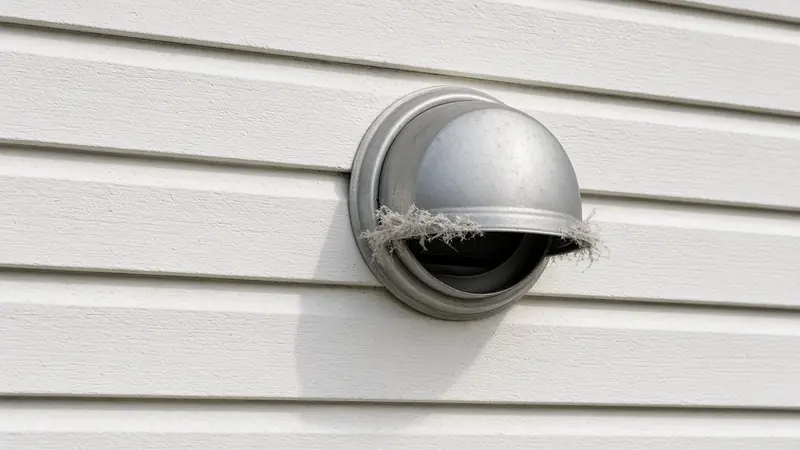
The U.S. Consumer Product Safety Commission says to clean the lint screen every load and keep the duct and outdoor hood clear. That guidance is here: CPSC clothes dryer fire prevention. A screen that looks clean does not prove the pipe in the wall is clean. A vinyl duct that is crushed behind the dryer, a hood painted shut, or a nest in the outlet will hold heat in the cabinet.
A thermal fuse often opens after a blocked dryer vent. The dryer then tumbles with no heat, which is the safe failure. Replacing the fuse without clearing the vent repeats the failure. Do not bypass the fuse to get one more load. There is no wiring diagram on this page for that reason. Clearing the duct is the owner step. The fuse itself is for someone following that model's service manual with the dryer unplugged.
The 240-volt breaker
Many U.S. electric dryers use a double-pole 240-volt breaker. If one pole opens, the drum can still turn and the heater stays cold. The breaker handle can look normal. Reset by moving the breaker fully off, then on. If it trips again, call an electrician. Do not tape the handle or swap in a larger breaker.
Gas dryers do not use that 240-volt heater. If the model tag says gas, or you already see a gas connector, stop before any gas valve or orifice. A gas odor is a leave-the-room problem for the gas supplier or a qualified technician, not a vent-brush problem.
Where the brand pages take over
After the screen, the hood, and the breaker, the next clue is the code on that brand's panel. A Samsung unit may show tC or tE, and Samsung's damp-clothes check is a wipe of two sensor bars that will not revive a cold heater. Those details are on Samsung dryer not heating. LG's airflow warnings, including Flow Sense and d80, d90, or d95 on many LG dryers, are on LG dryer not heating. Whirlpool's own no-heat path is on Whirlpool dryer not heating.
Confirm any code in the manual for the model number on the door frame. A code from a forum post about a different year is not a parts list. More dryer topics are grouped under dryers, and screen habits sit with maintenance and cleaning.
| What you notice | Likely cause | Safe check |
|---|---|---|
| Drum turns, air stays cool on timed heat | Open heat circuit, half a breaker, or a blown thermal fuse | Hood and lint screen, then breaker fully off and on |
| Air is warm, clothes stay damp | Restricted duct or a sensor ending the cycle | Clean the path outside; see the brand page for sensor bars |
| Long dry times that got worse for months | Duct filling with lint | Screen every load, hood flap free, duct not crushed |
| Breaker looks on, still no heat | One pole of a double-pole breaker open | Move the breaker fully off, then on; electrician if it trips |
| Gas smell, no heat | Gas supply or burner | Stop before any gas valve |
| Cabinet hot, drum not turning | Belt or motor problem with heat still on | Unplug now. Do not keep testing |
Checks in order
Pick a cycle that should heat
Use timed high heat, not air fluff. If the manual shows a no-heat icon on the cycle you had selected, the dryer was doing what it was told.
Clean the screen and watch the hood
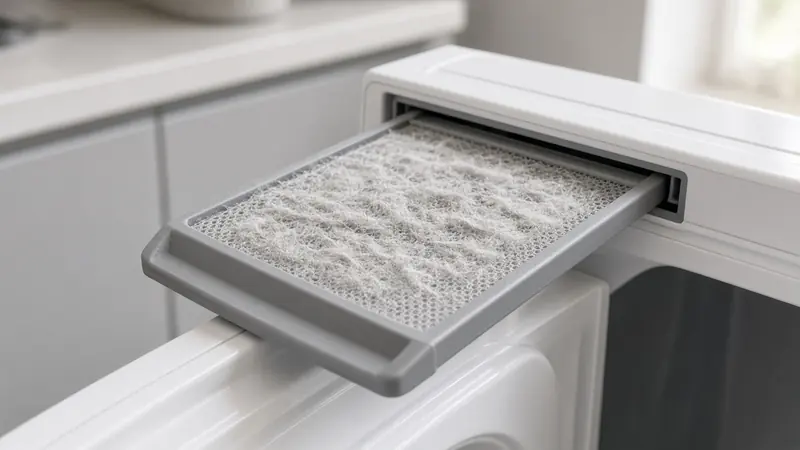
Pull the lint screen and clear it. Run the dryer and look at the outdoor hood if you can do that safely. A flap that does not open is a blocked vent even when the screen was clean.
Reset the electric breaker the right way
For an electric dryer, move the double-pole breaker fully off, then on. One pole can fail while the motor still runs. If the breaker trips again, stop and call an electrician. Gas models skip this step.
Separate warm-and-damp from cold
After a few minutes of timed heat, the drum air should be warm. Cold air is no heat. Warm air with damp clothes is airflow or a sensor. Do not order a heater for the second case.
Match a code to the brand
Write down the display. Samsung, LG, and Whirlpool do not share one code list. Open the brand page and the manual for your model. Ignore a code this manual does not list.
Stop before the cabinet or the gas valve
Do not bypass a thermal fuse. Do not adjust a gas valve or orifice. If the duct is clear, the breaker holds, and timed heat is still cold, a technician takes the cabinet apart with the dryer unplugged.
Questions readers ask
Why does my dryer tumble but not heat?
The motor can run on part of the supply while the heater cannot. Many U.S. electric dryers use a double-pole 240-volt breaker. If one pole opens, the drum still turns and the heater stays cold. Move that breaker fully off, then on. If it trips again, call an electrician. A blocked vent can also open a thermal fuse and leave you with the same tumble-and-no-heat result. Clear the duct before anyone replaces the fuse.
Will a new thermal fuse fix no heat?
Only if the vent is clear and the new fuse is the part that model's service manual calls for. A thermal fuse often opens because lint blocked the duct and the cabinet overheated. Putting a fuse back on a blocked vent repeats the failure. Never bypass the fuse to finish a load. This site does not publish a wiring diagram. If you are not following the service manual with the dryer unplugged, hire a technician.
What if the air is hot but the clothes are still damp?
The heater is working. Look at airflow and sensors, not at a new element. Clean the lint screen, confirm the outdoor hood opens, and check for a crushed duct. Some Samsung dryers need the two moisture bars inside the drum wiped when clothes stay damp. That wipe does not apply to every brand, and it does not fix cold air. Use the Samsung page only if you own a Samsung.
Is a gas dryer checked the same way?
The lint screen and the outdoor hood still matter, because a blocked vent overheats a gas dryer too. The 240-volt breaker reset does not. Gas heat stops at the valve and the orifice. Do not adjust either one. If you smell gas, leave the area and contact the gas supplier or a qualified technician. Confirm gas versus electric on the model tag before you assume a breaker is the cause.
The dryer is hot and the drum will not turn. What now?
Unplug it. Heat without tumbling can scorch clothes and start a fire. A motor that still runs with a loose drum often means a broken belt, but the cabinet stays closed unless you are following that model's service manual. Do not keep the cycle running to see if the drum catches. Use the separate guide for a dryer that heats but does not spin, and call a technician if you are not doing that repair from the manual.