On this page
A dishwasher not draining leaves cloudy water in the tub after the cycle should have emptied. The brand on the door changes the code you might see. It does not change the first checks: filter, air gap or high loop, hose, and a disposal knockout. Work those before anyone prices a drain pump.
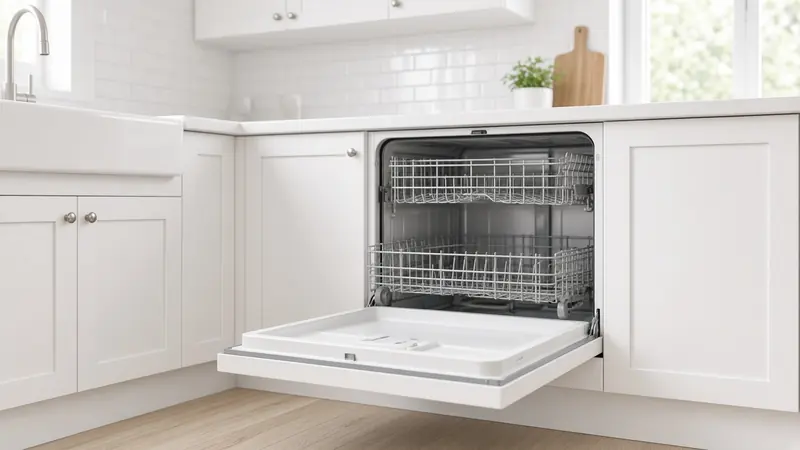
Why is my dishwasher not draining
Why is my dishwasher not draining after an otherwise normal wash is usually food, paper, or glass packed where the water has to leave. The pump can run and still move nothing if the path is closed. A pump that never runs is a different fault: door latch, control, or the pump itself. Listen at the end of the cycle before you decide which one you have.
If the dishwasher is not draining, do not add a second wash on top of the standing water. You will flood the filter area and can leak at the door. Cancel or drain the way the manual names those buttons for your model. There is no single button sequence that fits every brand.
A full tub versus a little water left behind
A dishwasher not draining completely still shows a visible pool under the lower rack when the cycle is done. Many manuals call a small amount in the filter cup normal. If the rack feet sit in water, you are past that. A dishwasher not draining all the way can look like a weak pump when the filter is only partly blocked. Dishwasher not draining water that looks clean is still a restriction. Labels and glass catch in the same screen as oatmeal.
Water not draining from dishwasher filters
Water not draining from dishwasher tubs is, on most machines made in recent years, a filter the manual tells you to rinse. Lift it only the way that manual shows, rinse it, and seat it again. A loose filter can leak or wash poorly. If no filter is visible, do not pry at the tub. Dishwasher water not draining overnight means the last cycle never emptied. Bailing water lets you see the filter. It does not prove the pump failed.
Air gaps, high loops, and the disposal
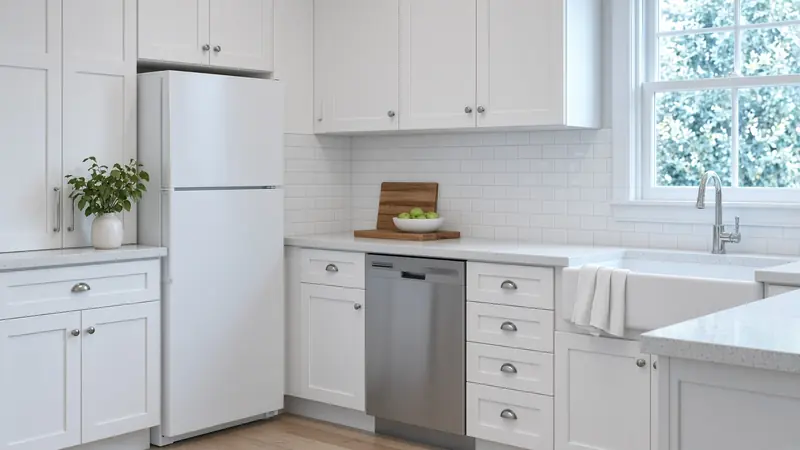
Many U.S. sinks have a chrome air gap on the counter beside the faucet. Water spitting from that cap means the air gap, or the hose beyond it, is restricted. Lift the cap and clear debris only if you can do it without tools in the plumbing. Not every home has an air gap. Some installs use a high loop: the drain hose rises under the counter before it drops to the disposal or the tailpiece. The height and the routing belong to your install guide, not to a universal inch measurement.
A dishwasher tied to a new garbage disposal will not drain until the disposal's inlet knockout plug is removed. If you do not do plumbing, stop. Do not keep running cycles to punch the plug out. Details on the disposal side are in garbage disposal not working. A disposal that hums and does not grind can also back up the shared hose.
How to fix dishwasher not draining without guessing the brand
How to fix dishwasher not draining at home is that path: cancel, filter, air gap or high loop, knockout, and a hose kink you can see under the sink. A hose crushed behind the machine means pulling the unit, the water line, and the electrical connection. Do not cut the hose to test it. That pull is technician work if you are not set up for the leak on the floor.
Codes are brand-specific, and they are not interchangeable. Many Whirlpool dishwashers show F8 E1 for a slow drain. Many Bosch units show E22, E24, or E25. GE prints the blink pattern for that model on its support site rather than one chart for every GE tub. Confirm any code in the manual for the exact model. The brand pages go further:
- Whirlpool dishwasher not draining, including Gold series units and F8 E1
- GE dishwasher not draining, including Nautilus and Cafe
- Bosch dishwasher not draining, including the drain codes and the salt question
- Samsung dishwasher not draining for that maker's own checks
More model families sit in the dishwashers section. Day-to-day filter habits are in maintenance and cleaning.
| What you notice | Likely cause | Safe check |
|---|---|---|
| Gray pool under the lower rack at the end | Filter, hose, air gap, or knockout | Rinse the filter only if the manual shows one |
| A small puddle in the filter cup only | Often normal residual water | Compare it with the amount your manual calls normal |
| Water spits from a chrome cap by the faucet | Restricted air gap or hose beyond it | Clear the cap if it comes off by hand; otherwise stop |
| New disposal, dishwasher never drains | Knockout plug still in the disposal inlet | Stop if you do not do plumbing |
| Pump hums, water does not leave | Blockage downstream of a clean filter | Check the hose kink you can see without pulling the unit |
| No pump sound at all when the cycle should drain | Cycle not in drain, door, control, or pump | Confirm the manual's drain or cancel step, then stop if it stays silent |
Checks in order
Stop stacking cycles
If the tub is full, use the cancel or drain step your manual names. Wait until the pump stops before you open the door. Note whether you heard a pump.
Read the code, then the manual
Write down any letters or blinks before you clear them. Whirlpool, Bosch, and GE do not share one code list. Match the code to this model on the maker's site.
Rinse the filter you are allowed to touch
Most recent dishwashers have a filter the manual says to rinse. Remove it as the drawing shows and lock it back. If you cannot see a filter, stop prying. Glass and kernels in the sump keep the pump from emptying the tub.
Check the sink end of the hose
Look under the sink. A kink, a hose shoved too far into a tailpiece, or a closed disposal inlet will stall the drain. Fix a knockout only if you do that kind of plumbing. Otherwise stop.
Check for an air gap
If a chrome air gap spits, that fitting or the hose past it is restricted. If you have no air gap, follow the high-loop note in your install guide. Do not buy an air gap as a test.
Run one drain and watch
With the filter seated, run a drain or a short rinse. If the tub empties, the filter or air gap was the block. If the pool returns, stop. The rest is in the pump or the hidden hose.
Questions readers ask
Is a little water in the bottom of the dishwasher normal?
Often yes, and the manual is the judge. Many models keep a small amount in the sump or filter cup so the seals do not dry out. A pool that covers the lower rack feet, or water that is still dirty after the cycle ends, is not that residual film. Rinse the filter if the manual shows one. If the deep pool returns on the next drain, the hose, air gap, or pump is still blocked.
Why did my dishwasher stop draining after a new disposal?
New disposals ship with a knockout plug in the dishwasher inlet. The drain hose can be clamped on and the plug still blocks the hole, so the pump runs and the tub stays full. Removing the plug is plumbing under the sink. If you do not do that work, stop and call a plumber. Do not run more cycles to force the plug out. An older disposal that used to drain is more likely a clogged hose than a plug.
What does water spitting from the chrome fitting mean?
That fitting is an air gap, and many U.S. sinks have one on the counter. Spitting means the air gap or the hose beyond it is restricted. Not every home has an air gap. Some use a high loop under the counter instead. Do not remove an air gap because a forum said a loop is enough. Clear only what lifts off by hand, and stop if the hose connection is brittle or leaking.
Can I fix a drain problem by replacing the pump first?
A new pump will not push water through a plugged filter, a closed knockout, or a kinked hose. Clean the path the manual lets you reach, then listen. A hum with no movement after that cleaning points to a blockage you cannot see or a weak pump. A total lack of sound can be the latch, the control, or the pump. Pulling the machine and changing the pump is technician work if you are not following that model's service steps with power off.
Do all brands use the same drain code?
No. Many Whirlpool dishwashers use F8 E1 for a slow drain, and that same code means low or no fill on many Whirlpool washers. Many Bosch dishwashers use E22, E24, or E25 for filter and drain faults. GE does not publish one blink chart for every model. The pattern is on GE's support site for the model you own. Confirm whatever you see in the manual before you order a part.