On this page
A GE washer not draining starts on GE Appliances support, where the blink pattern for your model is printed. Do not use a chart from a different GE series, and do not paste Whirlpool's F9 E1 onto this control. That code belongs to the machines covered in Whirlpool washer not draining. GE's own first step for a confused control is simple, and it has a hard limit.
There is not one error code for every GE washer. Match the blinks on GE's page for the model on the tag. After that lookup, the drain path you can check is the hose, the standpipe height in the install guide, and a filter door only if this model's manual draws one. Do not open the cabinet to chase a code the page does not list.
Why is my GE washer not draining
Why is my GE washer not draining usually splits into a control that lost its place and a pump path that is blocked. The GE washer not draining reset is an unplug of one to two minutes. Restore power and see whether the tub is empty. Water still standing in the basket means the reset did what it can do. The clog, the kink, or the pump is still there. Running the unplug again will not pull coins out of a pump.
Hose height, a standpipe that is sealed airtight, and a kink behind the cabinet are the shared checks on every brand. Use washer not draining for that shared layout, then return here for GE's reset and the blink lookup. GE's front-load drain page says most full-size washers should not have to pump higher than 8 feet from the floor, and a compact or portable may be limited to 5 feet. Use the height printed in the install guide for this model, and do not tape the hose end shut inside the pipe.
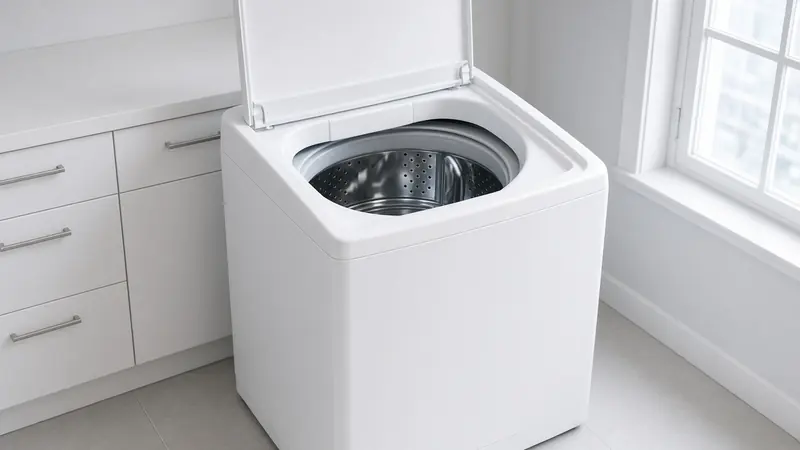
Blink patterns stay on GE's site
Count the flashes if you want a note for later, then open the support page for the model on the tag. The tag is often on the door frame or under the lid. A pattern that means "drain" on one top-loader can mean something else on a front-loader sold the same year. Publishing one chart here would mislead the other cabinet. If the page for your model says the pattern is a long drain, you still clear the hose and the filter the manual shows. The code does not replace that look.
A GE washer not draining or spinning is often the lid or door lock, or water that never left. Many GE top-loaders will not drain or spin until the lid locks. Listen for the lock after you close the lid. Clear fabric off the strike. Do not bypass a lid switch or a door lock. If the lock never engages, stop. Spin that starts only after the tub is empty is a drain success. Spin that is still missing after a truly empty tub is a different fault. Samsung's door and balance codes are not GE blinks; they are explained in Samsung washer not spinning.
| What you notice | Likely cause | Safe check |
|---|---|---|
| Tub full, no blink, cycle froze | Control fault that a power cut may clear | Unplug for one to two minutes, then look at the water |
| Tub still full after that unplug | Hose, standpipe, filter, or pump | The reset is finished. Check the drain path |
| Blinks you have not looked up | A code defined only for this model | Match the pattern on GE's page for this model number |
| Lid will not lock, no drain or spin | Lid lock open | Clear the latch. Do not jump the switch |
| Front-loader manual shows a lower door | Coins or lint in the filter | Unplug, open slowly, catch the spill |
| Top-loader with no lower door | No homeowner trap on that model | Hose and standpipe only. Do not pry the cabinet |
Order that keeps the reset honest
Unplug for one to two minutes
Pull the plug, wait one to two minutes, and plug back in. Start the drain or spin cycle the manual names. If the basket empties, the control had stalled and you can stop. If the water level does not drop, write "reset did not empty the tub" and move to the hose.
Match blinks to this model only
If lamps are flashing, count them and open the GE support page for the model on the tag. Follow only the drain instruction that page ties to that pattern. Ignore a photo of a different washer's display.
Prove the lid or door locks
Close the lid or door on an empty strike. You want the lock click the manual describes. A sock in the latch is a five-second find. A lock that stays silent needs a technician. Taping a switch closed is not a test this guide will walk through.
Reseat the hose at the guide height
With the washer unplugged, look for a flat spot in the drain hose. The standpipe height is the one printed in your install guide. The hose should not be sealed airtight. If the pipe itself is clogged and water backs into the laundry sink, stop and treat it as plumbing.
Use a filter door only when the manual draws it
Some GE front-loaders have a lower cleanout. Open it slowly. Water spills. Many top-loaders have no such door. If the drawing does not show one, leave the cabinet closed. A pump that rattles and then quits, with no cleanout, is the end of the homeowner checks.
Other washer symptoms sit under washing machines. Keep GE's blink lookup on GE's site so a later model change does not inherit a stale chart from this page.
What to have ready for the visit
Have the model number, how long you left it unplugged, and whether the water level changed at all. Note a lock that never clicked, coins from a cleanout, or a hose that had been kinked flat. Say whether any blinks were compared with GE's page for this model. Those details tell the technician the reset was already tried and the remaining fault is in the pump or the house drain. Leave the washer unplugged if the floor is wet.
Questions readers ask
Will unplugging a GE washer make it drain?
Unplugging a GE washer for one to two minutes can clear a control fault. It does not clear a clogged pump, a kinked hose, or a blocked standpipe. Plug it back in and start one drain cycle. If the water is still there, the reset worked only as a reset. Move on to the hose and, if the manual shows one, the lower filter. Another unplug will not empty a blocked pump.
Where do I look up GE washer blinks?
On GE's support site, under the model number from the tag on the washer. The blink pattern is printed for that model. A chart from a forum, or from a different GE washer in the house, can point at the wrong fault. Count the flashes, match them once, and follow only the drain step that page allows a homeowner to do. If the page sends you to service, stop.
The lid locks and the tub stays full. What next?
The lock has done its job. Check the drain hose for a kink and compare the standpipe with the height in your install guide. Do not seal the hose airtight. If this model has a lower filter in the manual, open it slowly while the washer is unplugged. If the tub is still full after that, hire a technician. Do not open the pump housing.
My GE front-loader leaves a little water. Is that a failed drain?
Check the manual for a stated leftover. A shallow film on some front-loaders is described there. Water deep enough to soak the next load is a drain fault. Use the hose and the filter door if the drawing shows one. A top-loader with a full basket and no filter door needs the hose check, then a technician if the basket stays full.
Can I use a Whirlpool drain code on this GE?
No. F9 E1 is a Whirlpool long-drain code on many Whirlpool washers, and it is not a GE blink. GE publishes its own pattern by model. Using the wrong code sends you into a pump replacement the display never asked for. Read GE's page for this tag, and keep Whirlpool's code list on the Whirlpool machine it belongs to.