On this page
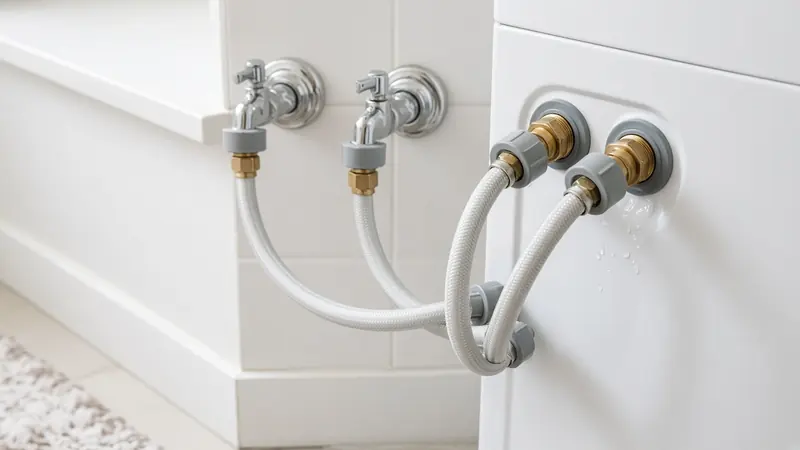
Start with the minute the water appears. A puddle in the first minute is a fill problem. Water that shows up once the drum is turning is a wash problem. Water that shows up when the pump runs is a drain or spin problem. If the floor is already wet, leave the cycle off. The corner of the puddle does not pick the cause. Why is my washing machine leaking from the bottom, and why is washing machine leaking from bottom, are that timing question. Washing machine leaking water from bottom in the first minute, and washing machine leaking from bottom during fill, both point at the inlet side until you have looked at the hose couplings. A wet coupling at the hot or cold tap, with the door or lid still dry, is the fill leak. Water leaking from bottom of washing machine when filling, with both hoses dry, can be foam or a tub that sloshes because a foot is off the floor. Shut the hot and cold taps if the coupling is wet and you can reach the valves without standing in water. With the taps off and the washer unplugged, look for a crack, a bulge, or a rust stain at the fitting. Replace a hose only when the water and power are off and the length matches the install guide. There is no hose part number here. If you do not work on supply lines, stop. Check a screen only if the manual shows one and the taps are already closed.
An oversudsing load pushes foam out of the dispenser or past the door and down to the floor. High-efficiency washers need HE detergent in the dose the manual allows. Regular detergent, or an extra scoop, runs down the cabinet and looks like a split tub. A tub that is not level walks in spin and can slosh during the wash. With power off, press opposite corners. If the cabinet rocks, set the feet from the install guide and keep the machine upright. Do not tip the washer onto its side. A kinked hose at the wall can spray when the valve opens, on the same timing as a loose coupling.
Front-load wash and spin
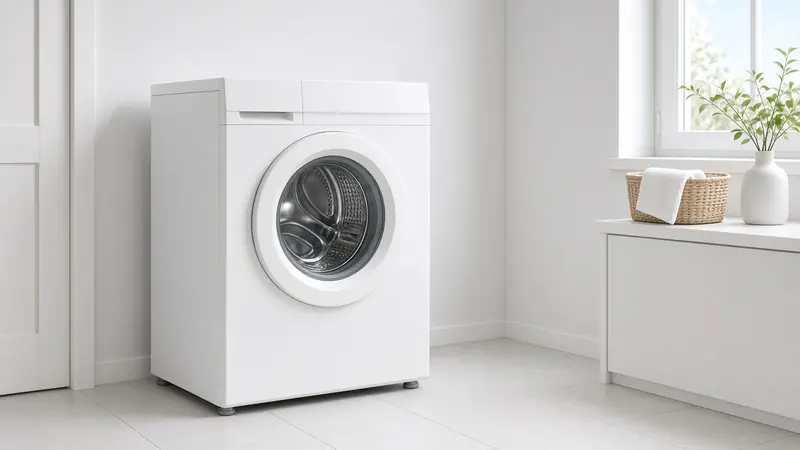
A front load washing machine leaking from bottom during the wash or the spin is often the door boot, the rubber gasket around the door. Coins, hairpins, and a fold hold the glass off the seal, and the water runs out at the bottom of the door. With the washer off, wipe the folds and pick out debris you can see. Leave the boot clamped on. Removing it is cabinet work for a qualified technician. Leave the door lock alone.
A washing machine leaking from bottom during spin cycle, after a wash that stayed dry, points at the boot taking the spin spray, a drain hose that is split or lying too low, or a pump that leaks only when it runs. The pump runs on the drain and again as the spin starts. A puddle with that sound, and dry inlet hoses, fits the drain side. Leave the pump in the machine. Pump replacement belongs to a technician with that model's service steps and the power off. A tub seal or a bearing can leak into the cabinet too. This guide does not tell you how to replace either one.
Top-loaders, dispensers, and a tub that walks
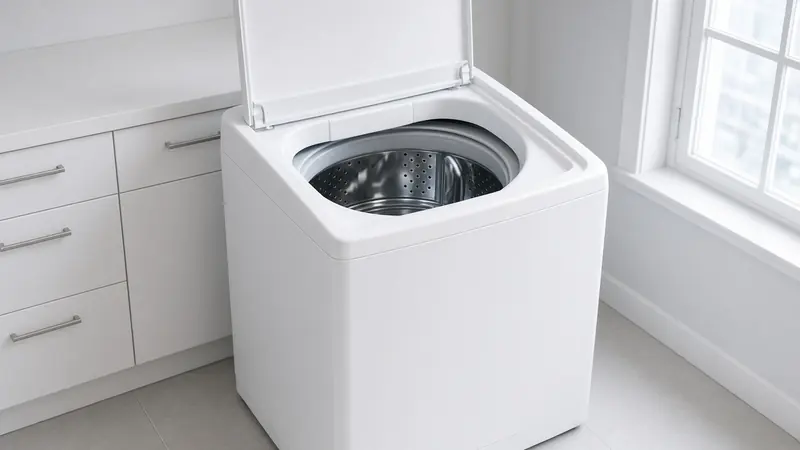
With the lid open, a top loading washing machine leaking from bottom often shows at the bleach or softener cup, or after the tub walks. A top load washing machine leaking from bottom can still be the fill hoses. During the wash, check the bleach cup and the softener cup against the line in the manual. Liquid past that line runs down the outside of the tub. A missing or clogged cover, if the manual shows one, overflows the same way. Lift a cup only when the manual says it comes out. A tub that walks can pull the drain hose out of the standpipe, and the hose on the floor then empties the tub. Guide it back only with the machine off, and only if you will not dump a full tub. If the tub is still full, stop and treat it as a drain problem.
The standpipe, the low corner, and causes you can see
Washing machine leaking from bottom causes include a standpipe that overflows, which looks like the washer itself failed. The pump pushes water up the hose, the drain cannot take it, and water runs onto the floor beside the cabinet. Suds, hose height, and a coin trap, where the manual shows one, are in washer not draining. Use the standpipe height in your install guide. A hose stuffed too far down, or one that never rises to that height, can siphon during fill or spill during drain. A split you can see, with the washer unplugged and upright, leaks when the pump runs. Hose and pump parts inside the cabinet stay closed.
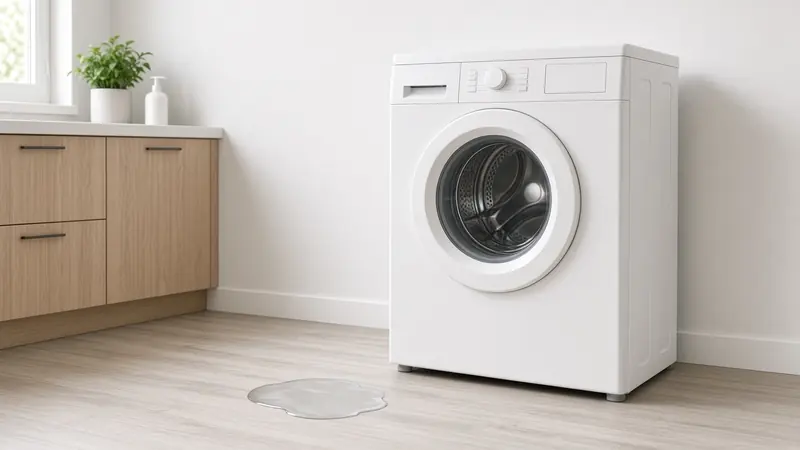
Water runs to the low side of the floor. That is why a washing machine leaking from bottom left can start at a rear hose and still sit at the front left corner. Note the first wet spot: the taps, the door, the dispenser, or the standpipe. A leaking washing machine from bottom should be unplugged, or the breaker switched off, before you slide it to see the back. Skip the slide on a soaked floor. A soaked outlet is a stop. Do not touch it. Other washer guides are under washing machines. Dispenser and hose habits are in maintenance and cleaning.
If the timing, the hoses, the boot or dispenser, and the standpipe do not explain the water, hire a qualified technician. Say when the water appeared and whether the inlet couplings were dry. A leak that remains after those checks can be a seal or a bearing. Leave that work to someone with the service manual for the model on the washer.
| What you notice | Likely cause | Safe check |
|---|---|---|
| Wet coupling at the wall as soon as the tub fills | Inlet hose, or the seal in that coupling | Shut the hot and cold taps if you can reach them without standing in water |
| Leak in the first minute, hoses dry, heavy foam | Wrong detergent, or more than the manual allows | Use the HE product and the dose the manual prints, on a high-efficiency machine |
| Cabinet rocks, then water appears | Feet not all planted, or an unbalanced load | Power off. Follow the install guide for the feet. Keep the machine upright |
| Front-loader wet at the door during wash or spin | Door boot folded, or holding a coin or pin | Machine off. Wipe the folds and remove debris. Leave the boot clamped on |
| Puddle only while the pump is audible | Split or low drain hose, or a pump that leaks when it runs | Leave the pump in place. Watch the standpipe and use the drain guide |
| Top-loader streaks from the bleach or softener cup | Cup filled past the line, or a cover the manual shows is missing | Fill only to the printed line. Lift a cup only if the manual says you may |
| Water rising at the standpipe, then a puddle by the cabinet | House drain or hose position, which looks like a bottom leak | Stop the cycle. Read the washer drain guide before another spin |
Checks in the order the water appears
Stop if the outlet or the floor is unsafe
A soaked outlet is a stop. Do not touch it. Shut the breaker off only if you can reach the panel without standing in water. Unplug the washer before you move it when the plug and outlet are dry. Shut the hot and cold taps if a coupling is wet and that floor is dry. Leave the machine off if you smell burning or the breaker has tripped.
Time the leak on a dry floor only
Watch the first minute for a fill leak, the wash for suds, the boot, or a dispenser, and the drain or spin for the pump or hose. Stop the cycle the way the manual describes. There is no shared button sequence. Write down the minute and the first wet spot.
Check fill hoses, suds, and level
With power off, look at both couplings if you can see them without standing in water. A wet nut, a crack, or a bulge is the fill leak. Leave screens alone unless the manual shows one and the taps are closed. Foam is the detergent dose. A cabinet that rocks gets its feet set from the install guide, upright.
Check the boot, the cups, and the drain hose
On a front-loader, wipe the door boot and clear coins or pins. On a top-loader, fill bleach and softener only to the line. Follow the drain hose to the standpipe with the machine unplugged and upright. A hose on the floor, a hose shoved too far down, or a visible split is a drain-side leak. Use the height in your install guide.
Separate a standpipe overflow from a cabinet leak
Water climbing out of the standpipe is the house drain or the hose, and it crosses the floor until it looks like the washer. Use the drain guide for suds, hose height, and a coin trap if your model has one. A pump that leaks only while it runs, with a dry standpipe and dry inlet hoses, stays in the cabinet.
Hand off seal, bearing, and pump work
Unplug the washer or switch the breaker off before any slide, and skip the slide on a soaked floor. Tell the technician the timing, the corner, and whether the taps were wet. Tub-seal, bearing, and pump work stay with that person and the service manual.
Questions readers ask
Why would a washer leak only during the fill?
The inlet valves open then, so a cracked hose, a loose coupling, or a bad seal at the tap shows up immediately. Oversuds and a rocking tub can add water in that same minute. Shut the taps if the coupling is wet and the floor is dry. Check a screen only when the manual shows one and the water is off. A leak that waits for the spin is a different path.
What does a front-load leak during spin usually mean?
After a dry wash, spin-time water is often the door boot, a drain hose that is split or too low, or a pump that leaks only while it runs. Coins and a folded gasket are visible with the washer off. Leave the boot clamped on and the pump in the machine. If the standpipe is overflowing, read the drain guide.
Can bleach or softener look like a leak under a top-loader?
Yes. Cups filled past the manual's line run down the outside of the tub. A cover the manual shows, if missing or clogged, does the same. Fill only to the line, and remove a cup only when the manual says it comes out. Still check the fill hoses. A walking tub can also pull the drain hose out of the standpipe.
Why does water at the standpipe look like the washer is leaking?
The pump is pushing water and the house drain, or a hose seated wrong, cannot take it. Water leaves the pipe, crosses the floor, and collects at the low corner of the cabinet. Treat it as a drain problem: suds, the hose height in your install guide, and a coin trap if the manual shows one. Another spin on a blocked standpipe repeats the puddle.
Can I replace a tub seal if the leak is under the washer?
No. A tub seal and the bearings behind it mean the cabinet comes apart, and those steps are not here. The pump is the same kind of job. Unplug the washer or switch off the breaker, then hire a technician if the hoses, detergent, door boot or dispenser, and standpipe do not explain the water. Do not tip the machine to look at the seal.