On this page
A washer not draining is a tub that still holds water when the cycle should be empty. If you are asking why is my washer not draining, start with suds, a hose that cannot push water up the standpipe, a clog in a coin trap, or a pump that hums and moves nothing. A washer machine not draining in the first week after a move is often the house drain, not a bad motor.
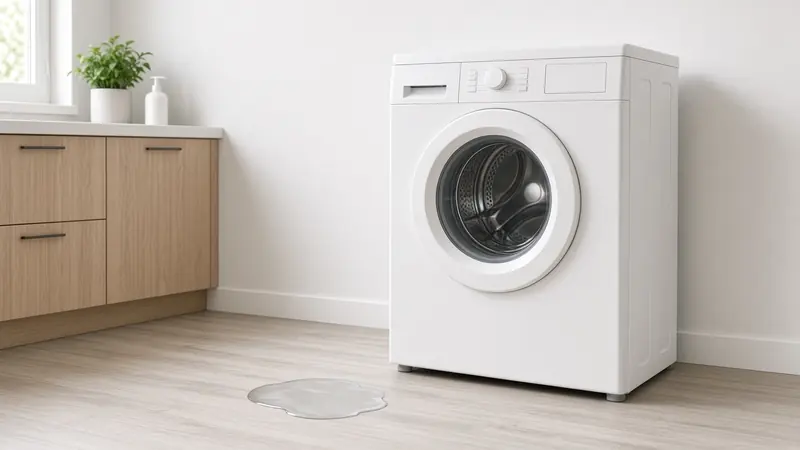
Washer not draining water and water not draining from washer describe the same sight: the level barely drops during the drain portion. My washer is not draining can mean a full tub or a puddle. A washer not draining all the way is the puddle case, and it usually points to a partial clog or a hose that is too long and looped on the floor. If the washer is not draining after a rinse that was full of foam, stop adding detergent and deal with the suds before you take the pump apart.
Suds, then the path the water has to climb
Foam is a drain failure that looks like a pump failure. Whirlpool shows Sud for excess suds on many washers. Samsung shows Sud for too many suds on many of its washers. Confirm either code in the manual for that model. Too much detergent, or the wrong kind for a high-efficiency tub, makes a mat the pump cannot push. Run the rinse or cleanout the manual names. Do not add more soap to "cut" the foam.
Install guides often want a washer standpipe about 39 inches high and not sealed airtight. Use the height printed in your own install guide, not a guess from a different brand. A hose shoved airtight into a low pipe can siphon water back into the tub. A hose that barely reaches a tall pipe will stall. Look for a kink behind the washer. The hose should climb to the standpipe without a second sag that holds a sock.
Coin traps are not on every washer
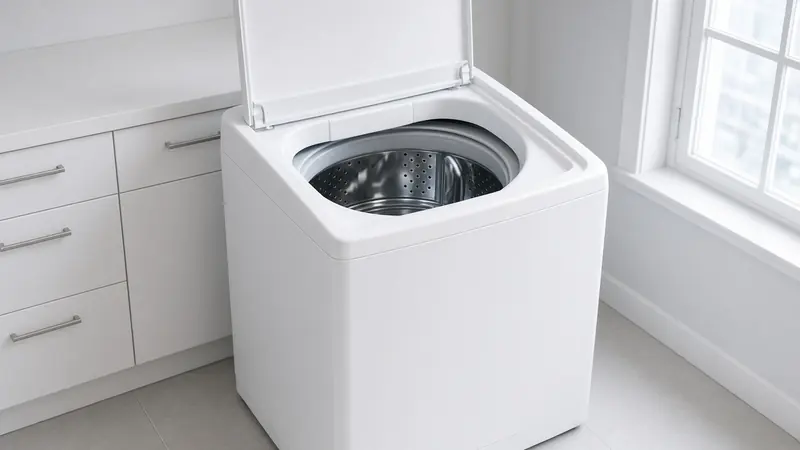
Many front-load washers have a lower coin-trap door. Open it slowly, because water spills. Set a pan and towels down first, and expect a coin, a bobby pin, or a wad of lint in the little basket. Many top-loaders do not have that door. If the manual does not show a lower door, do not pry at the cabinet to invent one. The clog is then in the hose, the standpipe, or a pump you should leave to a technician if the hose is already clear.
Listen during a drain step. A steady hum with a falling water line means the pump is moving water. A hum with a still water line means the pump is running against a block or is not coupled to the impeller. Silence, with water sitting there, can be a pump that never started or a control that never called for drain. Those two sounds are the reason to stop guessing and match the symptom to the table below.
What the water is telling you
| What you notice | Likely cause | Safe check |
|---|---|---|
| Thick foam and a drain code or a long pause | Excess suds | Use the manual's rinse or cleanout. Cut the detergent next load |
| Full tub, hose kinked or standpipe sealed tight | Water cannot leave the house side | Unkink the hose. Match the standpipe height to your install guide |
| Front-loader, water drops after the lower door is cleaned | Coin trap packed with debris | Open the door slowly over a pan. Clean only the basket the manual shows |
| Top-loader with no lower door, hose already clear | Pump or house standpipe | Do not invent a trap door. Note whether the pump hums |
| An inch of water left, most of the load is damp but not submerged | Partial clog or a sagging hose | Straighten the hose and clean the trap if the model has one |
| Water stays and the basket never turns | Drain step never finished, so spin is locked out | Fix the drain first. See the spin guide only after the tub is empty |
Brand codes, without mixing them up
A washer not draining or spinning should be read on the brand's own display. On many Whirlpool washers, F9 E1 means a long drain. The Whirlpool-specific path is the Whirlpool washer not draining guide, and a basket that still will not turn after the tub is empty belongs in Whirlpool washer not spinning. On many Samsung washers, 5C or 5E is the drain code, and 4C or 4E is water supply, not drain. On many LG washers, OE is drain. Confirm every code in the manual for the exact model. Older machines and other makers use other symbols.
For GE, do not publish or follow a homemade blink chart. The blink pattern is printed for that model on GE's support site. The separate GE washer not draining guide covers that reset note: pulling power for one to two minutes can clear a control fault and will not clear a clogged pump.
A drain check that does not bypass a lock
Stop the cycle and look at the water
Note whether you have foam, a full tub, or a shallow pool. Cancel only with the button the manual names. Do not force the lid or door. If a lock code is showing, the tub may still be full, and the lock is doing what it should.
Deal with suds before hardware
If you see foam, run the rinse or tub-clean step your manual describes and measure the next dose of detergent. High-efficiency machines need the HE kind. A second cap of soap will not finish a drain.
Trace the hose to the standpipe
Pull the washer out only far enough to see kinks. The hose end should sit in the standpipe without an airtight seal. Use the height in your install guide. Have a helper so the machine does not tip.
Clean the coin trap only if the manual shows one
On a front-loader, open the lower door slowly over a pan. Remove debris from the basket and seat the cap so it does not leak. On a top-loader with no door, skip this step.
Listen for the pump
Start a drain or spin the manual allows. A hum with falling water is progress. A hum with still water, or silence, means you have learned enough at home. Do not open the pump housing.
Use power-off only as a control test
Unplug for a minute or two, or switch the breaker off and back on, then try one drain. If the water is still there, the clog remains. Do not repeat the reset hoping the pump will clear itself.
After the tub empties
Run a rinse with no clothes and no detergent. The water should enter, then leave, without a new code. If that rinse drains and a normal load does not, the next load is too soapy or too unbalanced, not a failed pump. If the empty rinse also leaves water, you are back at the standpipe or the pump, and the stop above applies.
Washer guides for other symptoms are grouped under washing machines. Code meanings that these articles are allowed to name are indexed on the error code pages. Drain-hose and trap cleaning reminders also sit with maintenance and cleaning.
Questions readers ask
Why does my washer still hold an inch of water?
A washer not draining all the way usually has a partial restriction, not a dead pump. Lint, a small sock, or a hose that climbs and then sags can leave a shallow pool while the rest of the water leaves. Compare that puddle with the manual. Some tubs keep a little water in a sump by design. Water covering the bottom of the basket at the end of the cycle is not that normal remainder.
Should a top-loader have a coin-trap door?
Many top-loaders do not. Forcing a panel that the manual does not show can break clips and still miss the clog, which may sit in the pump or the house standpipe. Many front-loaders do have a small lower door. Open it slowly over a pan and towels. If your model has no door, stay with the hose, the standpipe, and the pump sound.
What do F9 E1, 5C, and OE mean?
On many Whirlpool washers, F9 E1 points to a long drain. On many Samsung washers, 5C or 5E points to a drain fault. On many LG washers, OE points to a drain fault. Confirm the code in the manual for your exact model, because older units and other brands use different screens. For a GE washer, do not guess from a blink chart. The pattern for that model is printed on GE's support site.
Will unplugging the washer make it drain?
Unplugging a GE washer for one to two minutes can clear a control fault. It does not clear a clogged pump, a kinked hose, or a sealed standpipe. Other brands also lose a temporary glitch after power is removed, and they keep a mechanical clog. If the tub is still full after power returns, go back to the hose and the trap.
The washer will not spin. Is that a separate failure?
Often it is the same water. A washer not draining or spinning commonly refuses to spin because the tub is still full or the lid never locked. Balance the load only after the water is gone. Brand-specific spin notes for Whirlpool are in the Whirlpool spin guide. Samsung and LG manuals also say to remove shipping bolts before the first cycle, which matters if a brand-new machine thumps and will not spin.