On this page
A refrigerator not cooling is two different faults that get lumped together. Sometimes both compartments warm up. Sometimes the freezer stays cold and the fresh food does not. The safe checks are a thermometer, the door gasket, the vents, and the coils. Adding refrigerant is not one of them.
Why is my refrigerator not cooling
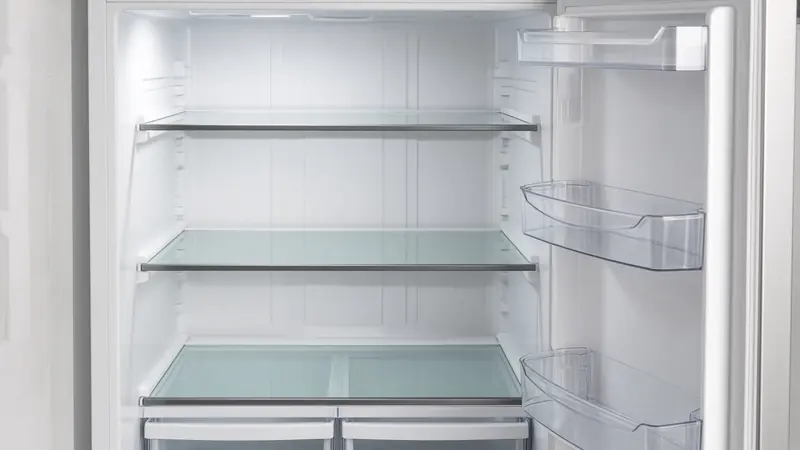
Why is my refrigerator not cooling often starts with a door that did not close, a load of hot leftovers, or coils packed with dust. My refrigerator is not cooling on the display can still be a lie. Put an appliance thermometer on a middle shelf and another in the freezer. Read them after the doors have stayed shut. The FDA temperature page is the reference: cold facts about food safety. Refrigerator at or below 40°F. Freezer at 0°F.
Why my refrigerator is not cooling after a delivery is often time. A new refrigerator can take up to 24 hours to reach the set temperature. Leave the doors closed. Do not fill it with warm groceries on hour one and then call it broken.
Refrigerator and freezer not cooling
Refrigerator and freezer not cooling together means the cabinet is not removing heat at all. Listen at the back or the bottom for a fan and for the compressor. Silence for hours, with food already warm, is a stop. Power, a condenser fan, controls, or the compressor can all do that. You cannot see which one from the front grille. Do not open the sealed system. Do not add refrigerant.
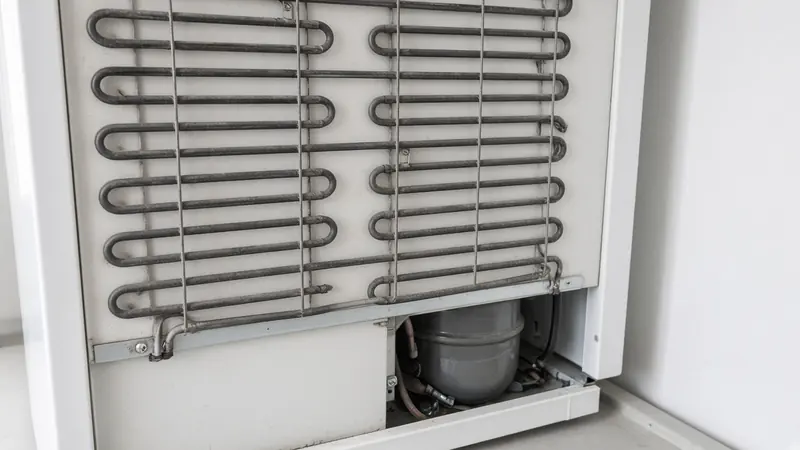
Unplug the refrigerator before you clean condenser coils. They sit on the back or underneath, depending on the model. The manual shows where. Vacuum dust. Do not bend the fins flat, and do not tip the cabinet alone. A dusty coil set is a real cause of a refrigerator that runs and never catches up. It is not a cure for a compressor that never starts.
Refrigerator not cooling but freezer is
A refrigerator not cooling but freezer is the airflow pattern. The freezer is near 0°F and the shelves above 40°F. Cold air is not reaching the fresh-food section, or it is leaking back out. Look for a blocked vent, a packed shelf against the rear wall, and a gasket that does not seal. A sheet of paper in the door that pulls out with no drag is a rough sign the gasket is tired. Heavy frost on the freezer wall can block the same path.
The refrigerator is not cooling enough when milk is sour-smelling but the air is not room temperature. That is still unsafe if the thermometer is above 40°F. Refrigerator not cooling enough is not a mild version you can ignore until the weekend.
How to fix refrigerator not cooling
How to fix refrigerator not cooling at home is the thermometer, the doors, the vents, and the coils. How to fix a refrigerator not cooling with a recharge kit is not a home repair. Sealed-system work belongs to a technician. How to fix a refrigerator that is not cooling in one section only is the airflow checks above. How to fix a refrigerator that is warm in both sections is the stop-and-listen check, then a service call if the compressor never runs.
Troubleshooting refrigerator not cooling
Troubleshooting refrigerator not cooling is a sequence, not a parts catalog. Refrigerator not cooling troubleshooting fails when the first step is a new control board. Confirm 40°F and 0°F, then the pattern: both warm, or freezer cold and refrigerator warm. Then the coils and the gasket. Then the brand page if the pattern matches a known frost or compressor issue.
Some Samsung French-door refrigerators ice over the evaporator and block airflow. One manual defrost, unplug, empty, doors open, towels, several hours, is only a test. If the frost returns, stop. Do not chip ice or use a heat gun. The full Samsung notes are on Samsung refrigerator not cooling.
LG has offered extra service coverage for specific linear-compressor serial ranges. Check the model and serial on LG's site. Do not assume every warm LG refrigerator has a failed compressor. Details are on LG refrigerator not cooling. Whirlpool's own cooling checks are on Whirlpool refrigerator not cooling.
| What you notice | Likely cause | Safe check |
|---|---|---|
| Both compartments warm, no sound at the back | Power, fan, control, or compressor | Confirm it is plugged in, then stop. Do not add refrigerant |
| Freezer cold, refrigerator warm | Blocked vent, gasket, or frost blocking airflow | Thermometer in both sections, clear the vents, paper test on the gasket |
| Runs constantly and never catches up | Dusty coils, hot kitchen, or a weak system | Unplug and vacuum coils the manual shows |
| Just delivered, cabinet still warm | Normal pull-down | Wait up to 24 hours with the doors closed |
| Samsung French door, heavy frost, poor cooling | Evaporator iced over on some models | One defrost test, then the Samsung page if frost returns |
| Warm LG, and you suspect the compressor | Only some serial ranges had extra coverage | Check model and serial on LG's site before you assume |
Checks in order
Measure, then close the doors
Place thermometers in the refrigerator and the freezer. Leave the doors shut long enough to get a real reading. You want 40°F or below and 0°F in the freezer. A dial in the middle of the range is not a measurement.
Give a new cabinet a day
If the refrigerator was just plugged in, wait up to 24 hours. Opening the door every few minutes to check dumps the cold you are waiting for.
Clean the coils you can reach
Unplug first. Find the coils on the back or underneath using the manual. Vacuum the dust. Plug back in only when the brush and the cord are clear of the fan.
Sort the two patterns
Both warm points to the sealed system side or a fan that is not running. Freezer cold and refrigerator warm points to air that is not moving forward. Do not use one parts list for both.
Check the gasket and the vents
Close the door on a sheet of paper. It should not fall out. Move food off the rear vents. Heavy frost gets the brand page, not a screwdriver in the evaporator cover.
Stop before the sealed system
If temperatures are still wrong after coils, doors, and vents, hire a technician. Take the model tag with you. Brand pages cover Samsung frost, LG serial coverage, and Whirlpool checks without a recharge step.
Coil and gasket habits also sit with maintenance and cleaning. Related cabinets are in refrigerators and freezers. A freezer that is the only warm space is freezer not freezing.
Questions readers ask
How cold should the refrigerator and freezer be?
The FDA guidance used here is a refrigerator at or below 40°F and a freezer at 0°F. Check with an appliance thermometer, not only the setpoint on the display. Read it after the doors have stayed closed. A cabinet that is above 40°F in the fresh-food section is not a small miss. Do not keep tasting food to see if it is still good. A brand-new refrigerator can take up to 24 hours to reach those temperatures.
The freezer is cold but the refrigerator is warm. What failed?
Cold is being made, and it is not reaching the fresh-food section or not staying there. Blocked vents, an overpacked shelf, a gasket that does not seal, and frost on the evaporator are the usual reasons. Clean the coils only after you unplug. Do not open the evaporator cover or chip ice. If the freezer is also warm, you are in the other pattern, and a technician should take it from there if basic power and coil checks are already done.
Can I add refrigerant to a refrigerator that will not cool?
No. Household refrigerators are sealed systems. Adding refrigerant, piercing a line, or opening the compressor circuit is not a homeowner repair, and this site will not walk through it. Dusty coils, a door left ajar, and a blocked vent are the checks you can do. If the compressor never starts and both sections are warm, stop and hire a qualified technician. A recharge kit does not diagnose a fan or a control fault.
Does every warm LG refrigerator have a bad compressor?
No. LG has offered extra service coverage for specific linear-compressor serial ranges. Check the model and serial on LG's site before you assume yours is in that group. A warm LG can also be dirty coils, a blocked vent, or a refrigerator that was just plugged in. The LG cooling page on this site points at that lookup. Do not order a compressor from a headline.
What should I do with the food while I troubleshoot?
Move perishable food to a cooler with ice if the refrigerator is already above 40°F or you need the doors open for a long coil cleaning or a defrost test. Do not leave the doors open while you decide. If food has been warm, throw out what you would not trust. Refreezing thawed meat because the cabinet is working again does not undo the time it spent warm. Use the FDA temperature guidance rather than a smell test.