On this page
A Samsung refrigerator not cooling is sorted by what Samsung's own support pages separate: a mode that disables cooling, airflow that never reaches the fresh-food section, and a sealed system you should not open. Start on Samsung support with the model from the tag inside the cabinet, because button names change by series. Shared coil and gasket habits that apply to every brand are in refrigerator not cooling. The checks below stay with Samsung's patterns.
Why is my Samsung refrigerator not cooling
If my Samsung refrigerator is not cooling, write down two temperatures before moving food around. The FDA wants the fresh-food section at or below 40°F and the freezer at 0°F. Put a thermometer in a glass of water in the fridge and another between frozen packages, leave the doors shut for several hours, and read both. That page is here: FDA refrigerator thermometers. A new Samsung refrigerator can take up to 24 hours to reach the set temperature. Leave the doors closed during that first day.
Read the display before you pull the refrigerator out. Many Samsung refrigerators can sit in Cooling Off, also called demo or showroom mode. Lights and the dispenser still work, and the compressor stays quiet. There is no single button sequence for every model. Match the icon on your panel to the key chart in the manual, or look up that model on Samsung's site, and exit the mode the manual describes. If the words Cooling Off are on the glass, cooling was never asked to run.
Freezer cold, fridge warm
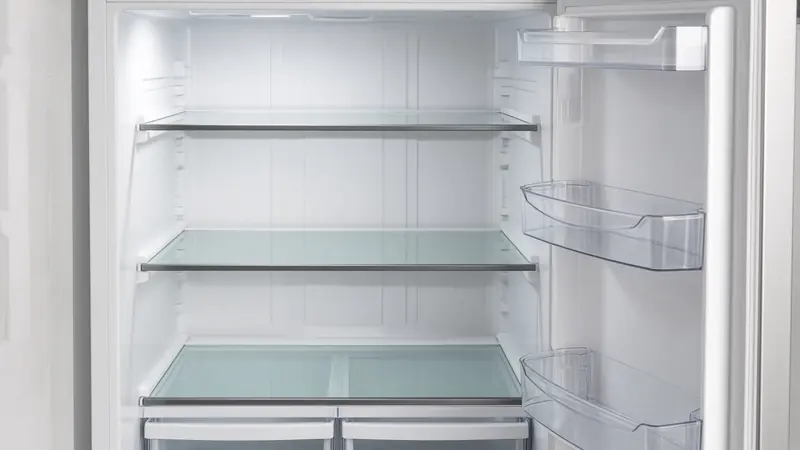
A Samsung refrigerator not cooling but freezer is working is an airflow problem you can see, or frost you should test once. Cold air has to move from the evaporator into the fresh-food section. Bags pushed against the rear vents, a crisper lid seated crooked, and a gasket that does not meet the cabinet will warm the fridge while the freezer still feels hard. Pull food a few inches off the vents. Close a dollar bill in the door; if it slides out with no drag, the gasket is not sealing on that spot.
Some Samsung French-door refrigerators ice over the evaporator and block that airflow. The fresh food warms, the freezer may look unusually frosted on the back panel, and the fan sounds strained or silent. One manual defrost is only a test: unplug the refrigerator, empty both compartments, leave the doors open, lay towels for melt water, and wait several hours. If cooling returns and the frost returns within a few days, stop. Do not chip ice or use a heat gun. A repeat freeze means a defrost or airflow fault for a technician, not a second afternoon with a scraper.
Some Samsung models use two evaporators and some share one. The manual names the system. You do not need to remove a panel to tell the patterns apart. Fridge-only warmth points at vents, the damper path, or that French-door frost test. Both compartments warm is the next section.
Both compartments warm
A Samsung refrigerator is not cooling or freezing when the fridge is above 40°F and the freezer is above 0°F together. A Samsung refrigerator not cooling or freezing after Cooling Off is ruled out is no longer a mode problem. A Samsung refrigerator freezer not cooling, with soft ice cream and a warm fridge, belongs in this group. Listen at the bottom and at the back for a fan and for the compressor's low hum after the doors have been shut for several minutes. Many fans pause while a door is open, so a silent fan with the door ajar is not proof of failure. Confirm that behavior in the manual.
| What you notice | Likely cause | Safe check |
|---|---|---|
| Lights on, compressor silent, Cooling Off on the display | Demo or showroom mode | Exit it using the manual for that model |
| Freezer hard, fridge warm, vents blocked by food | Air cannot reach the fresh-food section | Move food off the rear vents and recheck in several hours |
| French-door freezer panel plated with ice, fridge warm | Evaporator frost blocking airflow | One unplugged defrost with doors open. If frost returns, stop |
| Both sides warm, toe grille packed with dust | Condenser cannot reject heat | Vacuum only the dust the manual shows you can reach |
| Both sides warm, fans and compressor silent, mode is normal | Power, fan, or sealed-system fault | Confirm the outlet, then hire a technician |
| Ice maker empty and the freezer is warm | The freezer is not at 0°F | Fix cooling first. Ice will not form in a warm box |
Checks in order
Confirm the mode and the set points
Set the fridge at or below 37°F only if the manual allows that setpoint, and the freezer at 0°F. If the panel shows Cooling Off, follow the manual's exit steps for this model number. A control lock icon can block those buttons. The manual's key chart names it. Do not try a sequence borrowed from a different Samsung series.
Measure, then leave the doors shut
Read the thermometers after the doors have stayed closed. Opening the fridge every few minutes to check a bowl of soup keeps the box warm and makes the test useless. If the unit was just plugged in, give it up to 24 hours before you call it failed.
Clear vents and test the gasket
Move packages off the rear wall and the ceiling vents. Wipe the gasket with a damp cloth so crumbs are not holding it off the steel. Recheck temperatures with the doors left closed. This step is the whole repair when the freezer was already cold.
Run one defrost only if the panel is iced
Unplug, empty, doors open, towels down, several hours. Plug back in, set 0°F and a normal fridge setpoint, and leave it alone. Mark the date. If the same slab of frost is back in a few days, that test has done its job and you should stop.
Clean the condenser the manual exposes
Many Samsung cabinets hide the coils behind the front toe grille. Vacuum lint you can see there. If your manual shows coils on the back, roll the refrigerator out only far enough to clean them, and watch the water line so it does not kink. Skip this if you cannot move the cabinet safely.
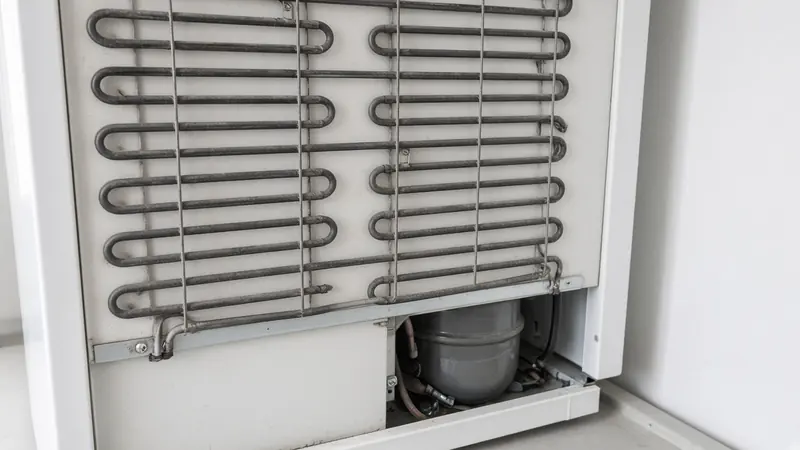
Condenser dust, a hot kitchen, and a tired gasket show up on other brands too. Keep that shared explanation short and use the general cooling guide linked above. An LG linear-compressor coverage check does not apply to Samsung; that serial-number lookup is explained in LG refrigerator not cooling. More cold-appliance guides are listed under refrigerators and freezers.
What to tell the technician
Record the model and serial from the tag, both thermometer readings, whether Cooling Off was displayed, and whether a French-door panel was iced. Say whether the frost returned after one defrost, and whether you heard a fan with the doors closed. Those notes separate a mode issue, a frost issue, and a sealed system. Food that has warmed above 40°F should be judged with the FDA guidance, not by taste. Keep the doors closed until you have a plan for the food, so the cabinet does not warm further while you wait.
Questions readers ask
The lights work and the fridge is warm. Is it plugged in?
Power is present if the lights and the display are on. The next split is Cooling Off versus a compressor that is not running. Exit demo mode only by the steps in your model's manual. If the display is in normal mode, the doors have been shut, and you still hear no compressor or fan, stop. A warm cabinet with live lights is not something to solve by adding refrigerant.
How long should a manual defrost take on a Samsung French-door?
Plan on several hours with the unit unplugged, both doors open, food moved to a cooler, and towels under the freezer. The test is done when the frost on the rear panel is gone, not when a clock hits a magic minute. Plug it in, set the freezer to 0°F, and leave the doors closed. If the same frost is back within a few days, hire a technician and do not scrape the panel.
Can a dirty condenser make only the fridge warm?
Heavy dust usually warms both compartments, because the condenser serves the whole sealed system. A cold freezer with a warm fridge points first to vents, the door gasket, or evaporator frost on certain French-door models. Still vacuum the toe-grille dust the manual shows. If the freezer is hard and the fridge is the only warm section, clearing that dust is useful housekeeping and may not be the cause.
The ice maker stopped and the drinks are warm. Which do I fix?
Fix the temperatures first. An ice maker needs a freezer at 0°F, a water supply, a seated bucket, and the maker switched on. None of those produce ice in a warm freezer. After the thermometer holds, replace the filter on the schedule in the manual, often about every six months, and throw away the first batches. Do not order ice-maker parts while the cabinet is still warm.
Should I keep opening the door to see if it is getting colder?
Leave the doors closed between readings. Each opening dumps the cold air you are trying to measure. Check the thermometer in the morning and again several hours later. A unit that was just delivered needs up to 24 hours. If the freezer is still far above 0°F after that, with Cooling Off off and the coils clear, stop and call a technician.