On this page
Dry the spot, wait, and see whether the water returns on a shelf, on the freezer floor, or on the kitchen floor. Those three surfaces are different paths. When you say my refrigerator is leaking water, answer what does it mean when your refrigerator is leaking water from that map, not from tubing you cannot see. Water leaking from refrigerator cabinets also has to be separated from a spill, a melted bag of ice, or a pitcher that tipped. Wipe those up and look again with the doors shut.
A shelf that only needs a wash, with the food still cold, is how to clean a refrigerator. This site does not take repair jobs, and it will not tell you to cut into a sealed system.
Water inside the fresh-food section
A wet fridge with wall dripping water, or water dripping from top of fridge inside, is usually condensation on the liner. Dry it, shut the door, and see if it returns before you treat it as a broken tube.
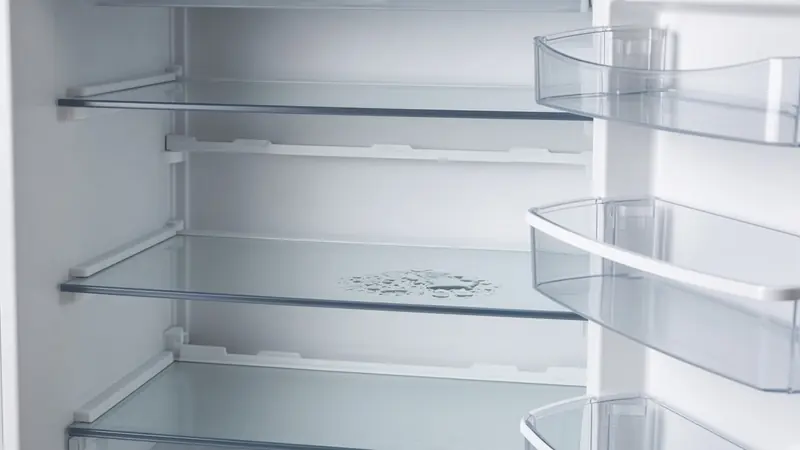
Why is my refrigerator leaking water inside after the doors have been opened a lot, or left ajar? The cause is often moisture from the room. Warm air enters, hits cold walls, and condenses. That water collects on the bottom shelf or under a crisper and looks like a leak. A package, a drawer that is not shut, or a gasket that does not meet the frame will hold the door off the seal. Close the door on a sheet of paper in several spots. If the paper pulls out with no drag, that spot is not sealing. Clean debris off the gasket. Do not tear the gasket to improve the seal.
A refrigerator is leaking water inside when the puddle is on that bottom shelf even though the door was shut and the gasket holds. The usual cause is a defrost drain that cannot carry melt water down to the pan under the cabinet. During defrost, frost turns to water and should leave through a channel the manual can point out. Food, ice, or a crumb in that channel sends the water into the fresh-food compartment instead. If your manual shows a drain hole you can see, lift out debris you can reach with a cloth. Do not drive a pick, a wire, or a screwdriver into a hole you cannot see the end of. That is how a line gets punctured. Do not chip ice. If the manual allows a defrost with the unit unplugged, food moved to a cold cooler, doors open, and towels on the floor, that is a test for an ice clog, not a repair you repeat every week. If the puddle returns after the channel is clear, stop.
The freezer can be the source
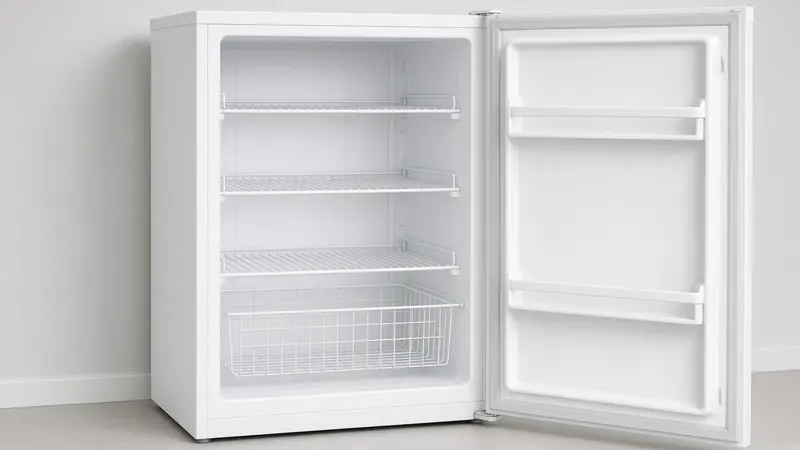
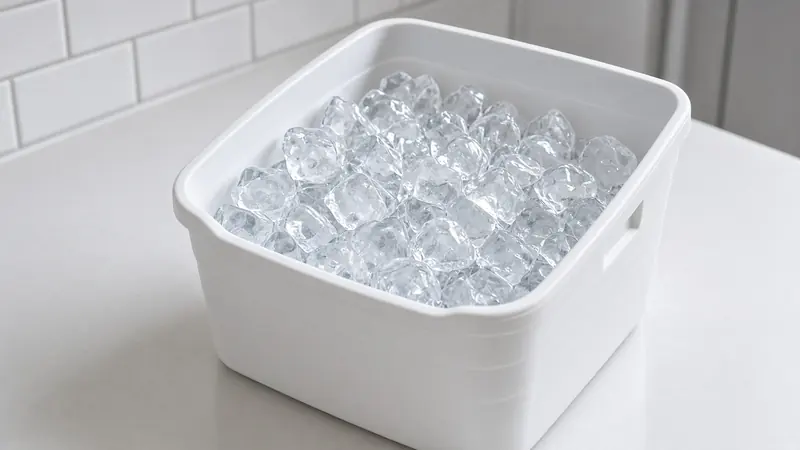
A refrigerator leaking water from freezer, with melt on the shelf below, often began as ice. An ice maker that overfills dumps water into the freezer. It freezes, then melts, and the melt runs forward or down the drain the freezer shares with the fresh-food section. A door left open does the same with frost. Shut the water supply to the ice maker only if that valve is obvious, dry, and you can turn it without forcing a fitting. Leave it off until you know the fill is under control. Empty-bucket and temperature checks for the maker are in ice maker not working. Do not disassemble the maker from this page.
Water on the kitchen floor
Why is water leaking from under my refrigerator if every shelf is dry? The water never sat in the food compartment, or it left through a path you cannot see from the front. Why is my refrigerator leaking water from the bottom is that floor case, the one you see along the toe kick. A refrigerator leaking water on floor tile that was dry an hour ago is worth tracing before it reaches a wall or a nearby outlet.
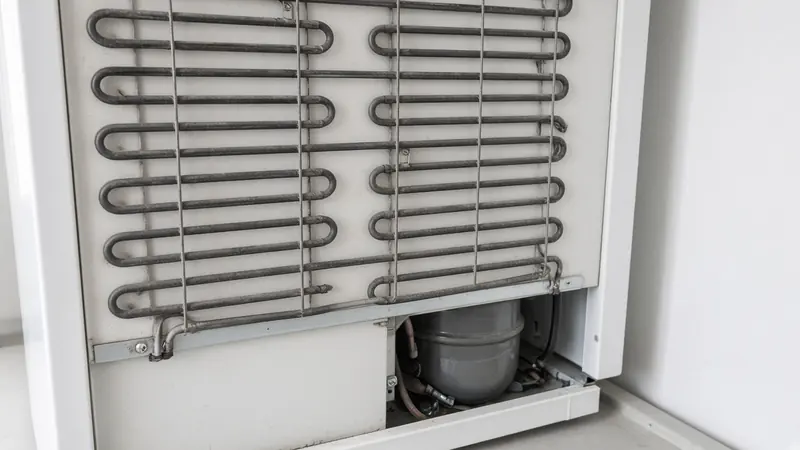
The pan under the cabinet is meant to catch defrost water and let it evaporate during normal running. A little water in that pan can be normal. A pan that overflows, a drain tube that has slipped out of the pan, or a cracked pan puts water on the floor. You may see the pan only by pulling the refrigerator forward. Unplug first if the cord is behind the cabinet. Watch the water line so you do not rip a fitting loose. If you are not set up to catch a leak, do not pull the cabinet. People describe refrigerator leaking water underneath the toe kick when the interior is dry and only the front edge is wet. That still fits the pan or a supply fitting.
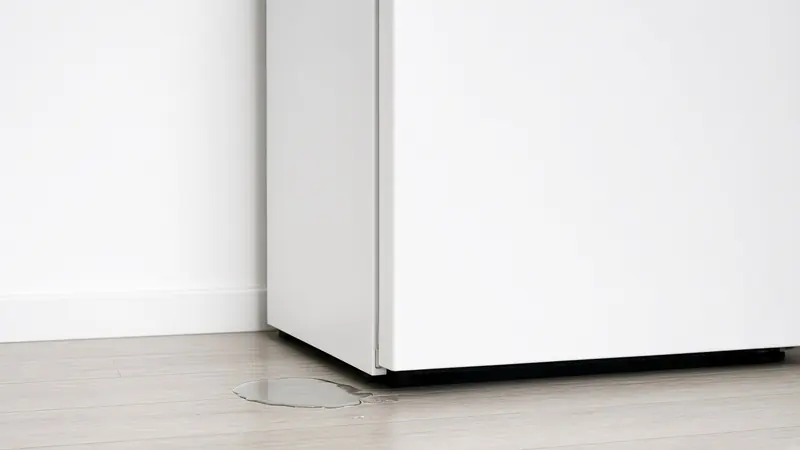
A refrigerator leaking water from bottom, with the interior still dry, is not a reason to open tubing. A refrigerator water line leaking at valve is the supply side: the joint where the household line meets the valve that feeds the ice maker or the dispenser. If that coupling is wet but not spraying, and you are comfortable shutting the saddle valve or the refrigerator's own water valve, you may turn that valve off, dry the joint, and watch. If you are not comfortable identifying that valve, stop and call a qualified technician or a plumber. Do not guess among several handles. If the coupling is spraying, shut the house water only if you already know that valve and can reach it without standing in the spray or over a live outlet. Otherwise stop. Do not tighten a fitting while it is spraying, and do not puncture a line to relieve pressure.
A refrigerator water dispenser leaking into the door is a third floor path. Water appears when someone dispenses, or a slow drip runs down the inside of the door and then to the floor. Dry the floor, do not use the dispenser, and see if the floor stays dry. If it stays dry until the next glass of water, the dispenser path is the lead, not the defrost drain. Do not take the inner door apart. Note whether the drip is constant or only during a dispense, and stop if the door cavity is wet around controls.
Temperature comes before the puddle
Put an appliance thermometer in a glass of water on a middle shelf, not in the door, and another between packages in the freezer. Read them after the doors have stayed shut for several hours. The FDA cold-food guidance sets the refrigerator at or below 40°F and the freezer at 0°F. Those are the targets. A cabinet above 40°F is a food-safety problem first. Perishable food held above 40°F for more than 2 hours is in the range the FDA tells you to discard. The linked page has the details, including the shorter time when the room is very hot.
Water plus a warm cabinet can be melt from food and frost in a machine that is not cooling. Follow refrigerator not cooling for airflow, gaskets, and coils you can reach with the unit unplugged. Do not add refrigerant. Do not open a sealed system. Do not puncture a line. A water puddle is not evidence you should charge anything. More cold-cabinet guides are grouped under refrigerators and freezers.
| What you notice | Likely cause | Safe check |
|---|---|---|
| Puddle on the bottom interior shelf | Blocked defrost drain, or a door that stood open | Clear only debris the manual's drain opening lets you lift. Check the gasket |
| Water or ice on the freezer floor | Ice maker overfill, or frost from an open door | Shut the ice-maker supply only if that valve is obvious and dry |
| Floor wet, shelves dry | Drain pan overflow, a missed drain tube, or a supply joint | Unplug before you pull the cabinet. Do not open tubing |
| Spray at a fitting behind the cabinet | Supply connection at the valve | House water only if you know that valve. Otherwise stop |
| Drip only when someone dispenses water | Dispenser path | Leave the dispenser unused and see if the floor stays dry |
| Warm shelves and a puddle | Melt from a cabinet that is not holding temperature | Read a thermometer. At or below 40°F, freezer at 0°F. No refrigerant |
Checks in order
Mark where the water is
Dry the shelf, the freezer floor, and the kitchen floor. Shut the doors. Look again later. Write down which surface got wet. A spill you can explain is not a leak.
Read both temperatures
Use thermometers, not the number on the door. Refrigerator at or below 40°F. Freezer at 0°F. If the fresh food is warmer than 40°F, deal with the food using the FDA page before you chase a fitting.
Check the door
Look for a package or a drawer holding the door open. Test the gasket with paper. Condensation from a door that stood ajar can look like a leak on the bottom shelf.
Ice maker, only if the valve is obvious
If the freezer is wet from an overfill, shut the ice-maker water only when that valve is obvious and dry. If you are not comfortable shutting the saddle or the refrigerator water valve, stop and call. Do not puncture a line to stop the fill.
Floor water and a spraying joint
If a coupling is spraying, shut the house water only if you already know that valve and can reach it safely. Otherwise stop. If the joint is merely damp and you know the saddle or the fridge valve, you may shut it, dry the area, and watch. Do not pull the cabinet until it is unplugged.
Stop at the cabinet shell
Look at the drain pan only if you can see it without removing a sealed assembly. A little water in the pan can be normal. A crack, or a tube that misses the pan, is technician work if you cannot seat the tube the manual shows. Do not add refrigerant.
Questions readers ask
How do I tell a shelf puddle from a supply leak?
Dry every surface and wait with the doors shut. Water that returns on the bottom shelf or under a crisper, with a dry kitchen floor, is inside the cabinet: a door that was ajar or a defrost drain that did not carry melt water down. Water that returns on the floor while the shelves stay dry left through the pan or a supply connection. Do not open tubing to decide which one you have.
Can I poke the defrost drain clear with a screwdriver?
No. If the manual shows a drain opening you can see, lift debris you can reach with a cloth. A pick or a screwdriver driven into a hole you cannot see the end of can puncture a line. Do not chip ice. An unplugged defrost, with food kept cold and towels down, is only a test when the manual allows it. If the puddle returns, stop.
The dispenser drips. Is that the water on the floor?
It can be. Dry the floor and do not use the dispenser. If the floor stays dry until the next glass, the dispenser path is the lead, and water may be running down the door. If the floor gets wet with the dispenser unused, look at the pan and the supply joint instead. Do not take the inner door panel off.
What temperatures matter while I deal with the water?
The FDA targets are a refrigerator at or below 40°F and a freezer at 0°F. Read an appliance thermometer after the doors have stayed shut, not the display alone. If the fresh food is above 40°F, perishable food is the first problem. The FDA page states how long food can sit warm. Do not add refrigerant to chase either the temperature or the puddle.
When should I stop touching valves?
Stop if you cannot tell the saddle or the refrigerator water valve from the other handles under the sink or behind the cabinet. Stop if a coupling is spraying and you do not already know the house shutoff. Stop if reaching the plug means standing in water. Call a qualified technician or a plumber. Shutting an obvious, dry ice-maker valve is the limit of the supply work on this page.