On this page
A finished cycle with soil still on the plates is a wash problem. A tub of gray water is a drain problem, covered in dishwasher not draining. Do not start another wash on standing water.
Why is my dishwasher not cleaning my dishes when the pump was audible the whole time? The sound only proves a motor ran. It does not prove the water got hot, that a spray arm turned, or that detergent left the cup. Grease that smears, food still stuck, and a white haze are three different faults.
What the dirty dish is telling you
When the dishwasher is not cleaning dishes, sort the load before you pull a filter. If soil smears and a middle plate feels cool after a normal cycle, the wash never got hot enough to cut fat. If food is still stuck and the plate is hot, water moved but the spray missed that surface, or the wash is recirculating debris. If the glass is cloudy and the food is gone, you are looking at film or etching.
A dishwasher running but not cleaning still fills and ends on the clock. A rinse-only cycle is not a test. Use the cycle your manual calls a normal wash. There is no single button sequence for every brand. A dishwasher not cleaning properly in the greasy sense fails that normal cycle even though the timer behaved.
No heat: grease stays soft
Dishwasher detergent is built for hot water. A cold fill leaves fat on plastic and on plate rims. At the end of a normal or pots cycle, a ceramic plate from the middle of the rack should feel hot. Cool, greasy dishes mean the household supply was cold or this tub did not heat. Many manuals expect hot water at the kitchen tap and then say whether the machine heats further. Use the figure printed in your manual.
If your manual says to run the sink hot before a cycle, do that. A long pipe from the water heater makes the first fill cold. Open a valve under the sink only if you are sure it feeds this dishwasher. If you are not sure, stop. A rinse cycle will not prove a heater. Cool, greasy plates on a normal cycle mean you stop. Heater parts are not a swap from this page.
No spray: arms, filter, detergent, rinse aid
A dishwasher not cleaning dishes properly, with grit on both racks, means the wash water did not strike the soil. With the door open and the machine off, the lower spray arm should spin by hand. A utensil, a cutting board, or a pot over the arm will park it for the whole cycle. The upper arm gets the same test. A tall platter that stops it leaves the top rack dirty while the bottom may look fine.
Seeds, glass, and label scraps plug the holes. If the manual shows how to lift the arm off, rinse it and clear holes you can see with a wooden toothpick. Do not drive a wire through the plastic. If the manual does not show removal, clean only holes you can reach. Seat the arm so it spins.
Most recent dishwashers have a filter the manual says to rinse. Remove it only as that drawing shows, rinse it, and lock it back. A filter left out lets debris through and can leak at the door. If you see no filter, do not pry the tub. A little water in the sump can be normal. A pool under the lower rack is a drain problem.
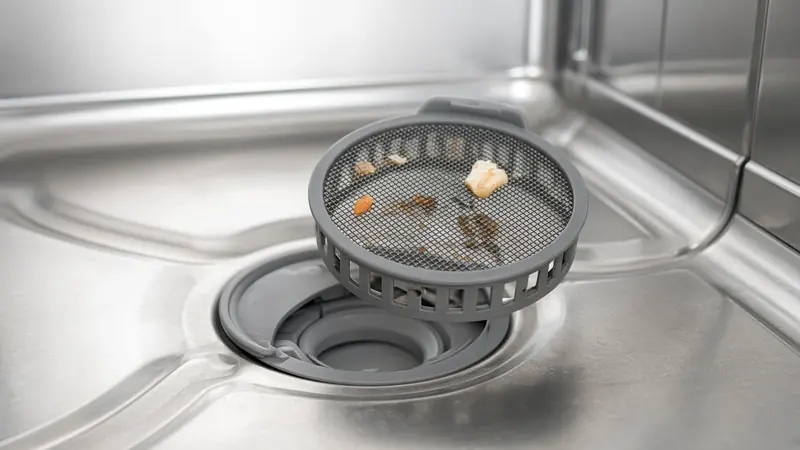
A dishwasher not cleaning dishes well on a hot load is often the soap. Hand dish soap suds and smothers the spray. Use detergent labeled for dishwashers. A pod tossed on the tub floor can sit in the sump and never dissolve. The door cup is the place the manual names. A tall plate in front of that cup can keep it from opening. An empty rinse-aid reservoir leaves spots. Spots are not food left on a bowl. Fill rinse aid only if your manual shows a reservoir.
How to fix a dishwasher not cleaning stops at those reachable parts. A wash motor that no longer drives water through clear arms is technician work. This page does not include steps to replace that motor, a diverter, or a heater. If both arms are clear, the filter is seated, detergent was in the cup, and a small load is still gritty, stop.
Loading that blocks the upper arm
A dishwasher not cleaning top rack leaves glasses speckled while the plates underneath come out usable. Spin the upper arm with the rack out. It should turn without striking a mug. Then push the rack in until it stops. Many dishwashers feed that arm through a connection that meets only when the rack is fully in. If your manual shows that connection, confirm the two halves meet. If it does not, do not lever the back wall to invent one.
A dishwasher top rack not cleaning after someone nested bowls is the same blocked path. Bowls cupped together hold dirty water and never see a jet. Angle them the way the rack diagram shows. A dishwasher upper rack not cleaning on a light load points to the arm, the feed the manual shows, or holes packed with seed. Why is the top rack of dishwasher not cleaning after one overloaded dinner is usually a single tall item.
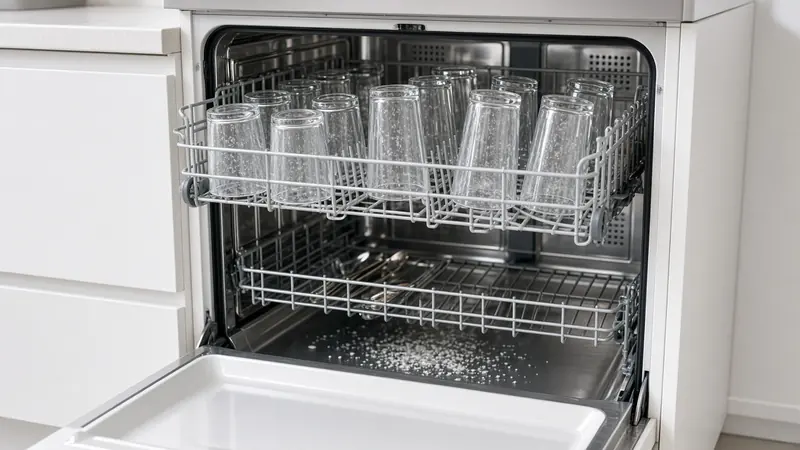
A dishwasher not cleaning bottom rack is the mirror image. The glasses look fine and the plates stay sandy. Look for a spoon through the lower arm, a sheet pan over it, or lower holes plugged while the upper arm is clear. Do not bypass the door latch to watch the spray. The latch is a safety, and Hearthline does not take repair jobs.
Film that looks like a failed wash
Hard water and too much detergent leave a coat that reads as dirt. Wipe a cooled glass with a wet finger. If the haze comes off, it is film. Use the detergent dose the manual allows for your water, and confirm rinse aid is present. If the haze stays, the glass may be etched from very hot water plus heavy detergent over time. Another cycle will not polish etching off. Cloudy upper-rack glasses are where you notice it first.
Many U.S. Bosch dishwashers have no salt compartment. Add salt only when your manual shows a reservoir. A white grit in the filter cup can be mineral or unused detergent. Rinse that cup only if the manual says it comes out. Do not scrape the tub with a metal pad.
Worse than it used to be, or new out of the box
A dishwasher not cleaning as well as it used to usually changed slowly. The filter has not been rinsed, spray holes have packed shut, rinse aid ran dry, or someone lowered the water heater. A dishwasher not cleaning well anymore is that gradual case. A small load on a normal cycle, with the arms free, tells you whether the full load was the problem.
A new dishwasher not cleaning in the first week is often the install. Look for shipping film or tape on the racks, the tub, or the detergent cup. Peel packing, not the door gasket. Put the pod or powder in the dispenser the manual shows, not loose in the tub.
If the disposal is new and the tub never empties, the machine sprays dirty water again. The inlet knockout plug has to come out first. That is plumbing. If you do not do plumbing, stop. Do not run cycles to punch the plug out. Air-gap and hose checks stay on the drain guide.
Suds are not a stronger wash
Foam means hand soap or far too much dishwasher detergent. Cancel the cycle the way your manual names that step. Bail foam if the door opens normally. Do not tip the dishwasher. Shut the breaker before anyone moves the cabinet. These checks do not require moving it.
| What you notice | Likely cause | Safe check |
|---|---|---|
| Grease smears, plates feel cool | Wash stayed cold | Run a normal cycle, then feel a middle plate. Confirm the tap temperature your manual asks for |
| Hot plates, food still stuck on both racks | Spray blocked, filter packed, or detergent never released | Spin both arms by hand with power off. Rinse the filter only if the manual shows one |
| Only the upper rack is dirty | Upper arm stopped or not fed | Clear tall items. Seat the rack fully if the manual shows a rear connection |
| Only the lower rack is dirty | Lower arm covered or its holes plugged | Move boards and utensils. Clear holes you can see without forcing the arm off |
| Haze that wipes off the glass | Hard water or too much detergent | Use the manual's dose. Check rinse aid. Do not add salt unless a reservoir is shown |
| Haze that will not wipe off | Etching of the glass | Another wash will not clear it. Reduce heat and dose going forward if the manual allows |
| First week, or standing dirty water | Packing, pod placement, or a disposal knockout | Remove obvious film. Stop if the knockout is plumbing you do not do |
Checks in order
Name the soil and the cycle
Write down grease, stuck food, spots, or a haze, and which rack. Confirm a normal wash, not a rinse. If the tub is full of water, use the drain guide.
Feel for heat
A middle plate should feel hot when that cycle ends. Cool and greasy means the fill or the heater. Open only a supply valve you already understand. If the plates stay cool, stop.
Free both spray arms
With the machine off, spin each arm by hand. Remove whatever stops it. Clear visible holes. Lift an arm off only if the manual shows that. Do not bypass the door latch to watch a live wash.
Detergent, rinse aid, and the filter
Use dishwasher detergent in the cup the manual shows. Confirm the cup can open. Fill rinse aid if a reservoir exists. Rinse the filter only if the manual shows one. If none is visible, do not pry the tub.
Run a small test load
One place setting, nothing over either arm. If that load is clean and a full load is not, the load was the block. If the small load stays dirty, stop. Wash-motor replacement is not in these steps.
New installs, then stop
Peel obvious shipping film and put the pod in the dispenser. If a new disposal leaves the tub full, stop unless you do that plumbing. Stop for a leak under the machine, a burning smell, or a tripped breaker.
Filter and rinse-aid habits sit in maintenance and cleaning. More guides are grouped under dishwashers. Use the manual for the model number on the door frame.
Questions readers ask
Does a noisy wash mean the dishes should come out clean?
Noise means something turned. It does not mean an arm spun or the detergent cup opened. Grease on cool plates points to heat. Food on hot plates points to spray, a filter the manual lets you rinse, or a blocked cup. A haze that wipes off is film. Stop if a small, unblocked test load is still gritty.
Can I leave the filter out so the pump moves more water?
No. If the manual shows a filter, it goes back the way the drawing shows. A missing filter lets debris into the wash and can leak at the door. If you see no filter, do not pry the tub to match another brand. Rinse only the screen your manual tells you to remove.
Why do the glasses look cloudy when the plates are clean?
Film, etching, and a stalled upper arm show up on glasses first. A wet finger removes film and leaves etching. Food on the rim means the upper arm did not turn or its holes are plugged. Seat the rack fully if the manual shows a rear water connection. Do not bypass the latch to watch the arm.
What should I check on a dishwasher installed this week?
Look for shipping film on the racks, the tub, and the detergent cup. Peel packing, not the gasket. Put detergent in the dispenser the manual shows. If the tub stays full and the disposal is new, the knockout may still be in place. That is plumbing. If you do not do it, stop.
Should the next step be a new wash motor?
Not from this page, and not before the arms, the filter the manual shows, the cup, and a small test load. A new motor will not clean through a parked arm or a cup that never opened. If those checks are done and the dishes stay dirty, hire a qualified technician. Do not tip the machine to reach the motor.