On this page
If you are asking why is my microwave not heating, there is a hard stop, and it arrives early. If the lamp, the fan, and the turntable run and the food stays cold, my microwave is not heating because of a high-voltage fault. Stop. Do not remove the cover. The only household how to fix microwave not heating is the outside checks below: the outlet, the door latch, the power setting, and a cup of water. Anything past that belongs to a qualified technician.
The shorter question, why microwave not heating, is different when nothing runs at all. A dark display can be a tripped breaker, a GFCI, or a door that never latched. Microwave not heating up on a cook cycle is the later case, after those outside checks. Microwave not heating food while the clock still works needs the water test before you decide which case you have.
Prove it is the microwave
A range oven and a microwave fail in different ways. If the cavity you are watching has racks and a bake element or a gas burner, use the oven not heating up guide. A Samsung oven not heating can be sitting in a warm mode, Sabbath mode, or Control Lock. Those range checks do not apply to a microwave keypad. Use the guide for the appliance in front of you.
Over-the-range microwaves add a surface light and a vent fan. Those can run from their own switches while the oven never cooks. Do not treat a lit lamp as a heat test. Start a timed cook at the highest power the manual lists for that model number. There is no single button sequence for every brand.
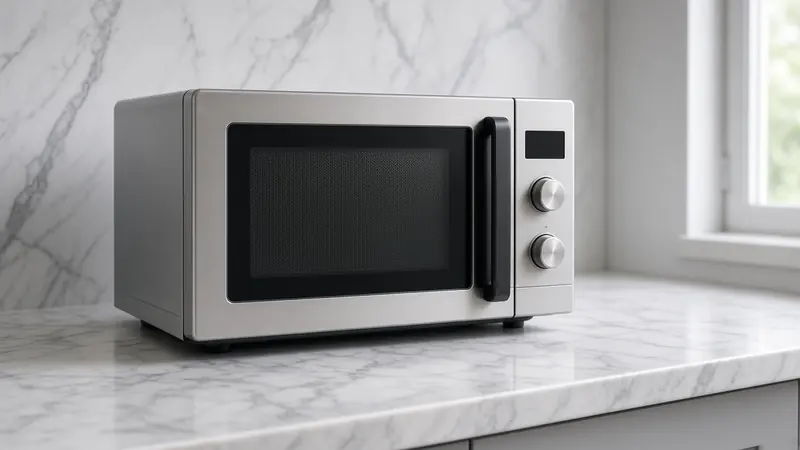
Power and the door, still outside the cabinet
Plug a lamp into the same outlet. If the lamp is dark, reset a GFCI you can see, or switch the breaker fully off and then on. Kitchens often put the microwave on a small-appliance circuit. A garbage disposal not working at the same time is a hint to check that breaker before you blame either machine. If the breaker trips again as soon as the microwave starts, leave it off and call an electrician. Do not keep resetting it.
Close the door until the latch catches. A spoon handle or a warped frame can hold it open a fraction. Look at the latch from the outside. If the door is bent, the hinge is cracked, or the latch does not catch, stop. Do not force the door and do not open the case to reach a switch. The microwave is not heating in any safe way until that door closes normally, and a damaged door is already a reason to retire the oven from use.
The only heat test to run
Set a microwave-safe cup of water in the center. Use full power for about one minute. No metal, no foil, no empty cavity. If the water is hot, the oven can heat, and a later cold meal was the wrong power level, a sensor cycle the manual describes, or a container of food that was too large for the time you chose. If the microwave is not heating on that one-minute test, note what else moved.
A microwave running but not heating means the light, fan, and tray did their part and the water stayed cold. That is the stop line. A few models have a showroom or demo mode that runs the fan without cooking. Only try the exit steps printed in the manual for that model number. If the manual has no such mode, or the mode exit does not make the water hot, stop. Do not hunt for a hidden sequence from a different brand.
| What you notice | Likely cause | Safe check |
|---|---|---|
| Display dark, no fan, lamp test fails in the same outlet | Outlet, GFCI, or breaker | Try a lamp. Reset the breaker once. If it trips again, call an electrician |
| Display dark, lamp works, door looks ajar | Door not latched | Clear the latch. If the door is damaged, stop |
| Surface light works, cook cycle never starts | Vent or lamp switch, not a heat test | Start a timed cook at full power from the manual |
| Turntable still, water gets hot | Tray, roller, or coupler not seated | Reseat the parts under the glass. Do not open the cabinet |
| Light, fan, and tray run, water stays cold | High-voltage fault | Stop. Unplug. Do not remove the cover |
| Sparking, burning smell, or a hot cord | Unsafe to test further | Unplug if you can do it safely and leave the oven unused |
Outside checks, then stop
Name the appliance
Confirm you are testing the microwave, not the range. If the problem is the oven cavity of a stove, switch to that guide. Write down the microwave's model number from the door frame or the manual before you change any setting.
Test the outlet
Use a lamp in the same receptacle. Reset a visible GFCI. Switch the breaker fully off, then on, one time. If the microwave and the disposal died together, the shared kitchen circuit is the first place to look.
Latch the door
Close it on an empty frame, with no towel or pan handle in the way. If the latch will not catch or the door is bent, stop. Do not dismantle the door.
Run the water test
One microwave-safe cup of water, about one minute, highest cook power listed for that model. Stay there and listen. Hot water means the oven can heat. Cold water with a running fan is the stop line.
Read demo mode only in that manual
If, and only if, the manual for that model number describes a showroom mode that runs the fan without heating, follow those printed steps once. Skip this step when the manual never mentions that mode.
Stop when it runs cold
If the microwave is running but not heating after the water test, unplug it. Do not remove the cover. Do not open the cabinet or touch anything inside it. A qualified technician takes the repair from here, or the oven is replaced.
What a hot cup changes
If the water is hot, the oven can heat and the earlier trouble was a setting, a sensor cycle, or the food load. Use a timed cook at full power for a known quantity, and read the manual before you trust a sensor popcorn or reheat key. If the water is cold, you are finished. Unplug the oven and leave the cabinet closed.
Small-kitchen appliances are grouped under small appliances. Range heating problems stay in the ovens and stoves section. Do not mix a bake-element diagnosis into this microwave.
Questions readers ask
Why does the microwave run if it will not heat food?
The lamp, fan, and turntable can run from ordinary circuits while the high-voltage section that makes heat has failed. A microwave running but not heating has already told you the useful fact. Stop. Do not take the outer cover off to look for the failed part. Unplug the unit if you can do that without moving a damaged cord, and have a qualified technician repair or replace it.
Is a dead display the same fault?
No. A blank display and a silent oven point at the outlet, a tripped breaker, or a door that is not latched. Test the same receptacle with a lamp. Check a kitchen GFCI if you have one. An over-the-range model can still light its surface lamp from a separate switch, so use a cook cycle, not the lamp, as the test. If a cook cycle then runs cold, stop.
Can I fix a microwave that sparks or smells hot?
Unplug it if you can reach the plug safely. Do not open the door and reach inside while it is running, and do not run another cycle to see if the spark repeats. A hot plug, a scorched cord, or arcing inside the cavity is a stop. The household checks in this article do not cover a burning smell. A technician should see the oven before it is used again.
The turntable does not spin. Does that explain cold food?
Not by itself. The glass tray, the roller ring, and the plastic coupler under the tray are outside the cabinet. Reseat them the way the manual shows. A tray that sits still can still heat food, it just heats unevenly. If you reseat the tray, run the water test, and the water stays cold while the fan runs, the tray was not the cause. Stop.
Could this be the range oven instead?
Yes, and the repairs are not interchangeable. A built-in or slide-in range that will not hold temperature is covered in the oven not heating guide, including Samsung models that stall in a warm or lock mode. A countertop or over-the-range microwave has its own door and its own plug. If you are standing in front of the range cavity, you are not testing the microwave.