On this page
How to clean an oven is maintenance. How to clean oven spills before they bake on is the same job done sooner. If the oven will not reach temperature, stop and use oven not heating up. Cleaner will not repair an element.
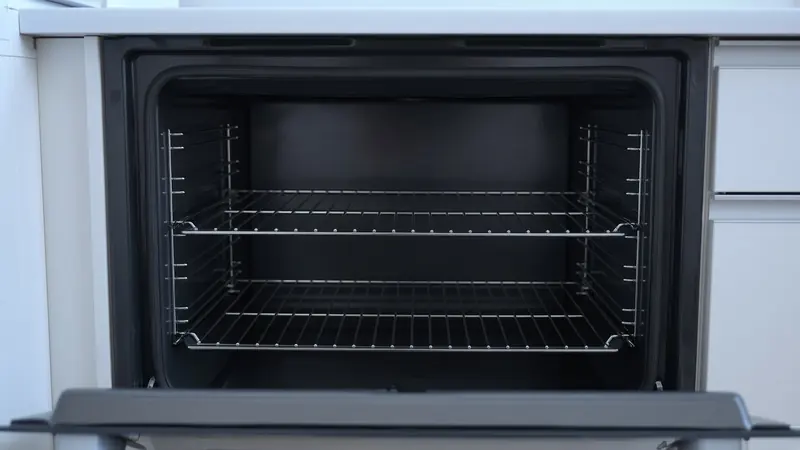
Cool the cavity and remove the racks
Turn the oven off and let it cool until you can touch the racks. How to clean oven racks is a sink job, not a job inside a hot cavity. Set them in hot water with a little dish soap. Do not put racks in a self-clean cycle unless the manual says those racks are rated for it. Many manuals say to remove them because the high heat discolors the metal.
How to clean oven naturally
How to clean oven naturally, for people who want to skip a commercial oven cleaner, is usually a paste of baking soda and water on a cool cavity, left long enough to soften spills, then wiped out. Use it only if your manual does not forbid a paste on that finish. Do not mix baking soda with a commercial oven cleaner, and do not mix any of it with bleach. Rinse until the paste is gone. A commercial oven cleaner is allowed only when the manual and the product label both say that cavity can take it. Follow the label for ventilation, gloves, and how long it may sit.
How to clean an oven door?
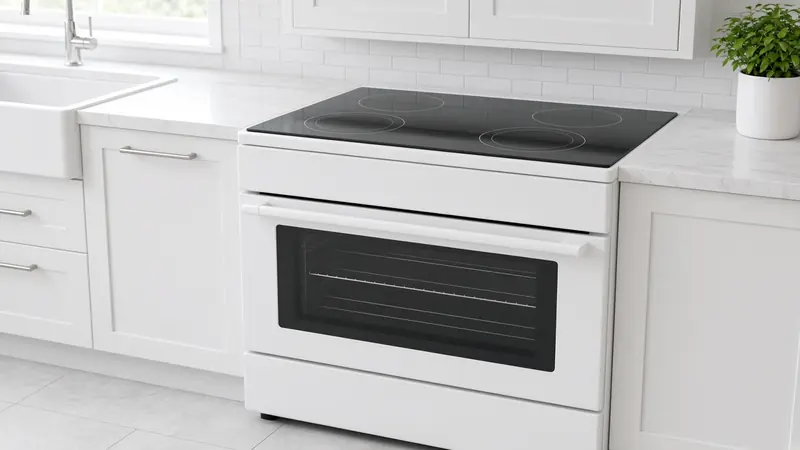
How to clean an oven door? Wipe the glass you can reach between the door and the cavity, with the oven cool and the cleaner the manual allows on that glass. How to clean oven glass and how to clean oven door glass are that window, not the cooktop. Do not pry the door apart to reach glass between the panes. That is a technician job. The black cooktop above the door, on a glass-top range, is how to clean a glass stove top.
Self-clean, only if the manual has it
A self-clean cycle locks the door and runs very hot. Use it only on a model whose manual includes it. Remove racks the manual says to remove. Ventilate the kitchen. Stay within the distance the manual describes, and do not leave a commercial oven cleaner in the cavity before you start that cycle. If the manual says birds or a smoke alarm can be a problem with the fumes, follow that warning. If the door will not unlock after the cycle, wait until the oven is cool. Do not force the latch.
| What you see | Likely cause | What to do |
|---|---|---|
| Baked spills on the floor of a cool oven | Ordinary residue | Racks out. Manual's cleaner or a paste it allows |
| Dirty racks | Drips from food | Soak them in the sink. Confirm they may go back in |
| Hazy window | Film on the inner glass you can reach | Cool oven. Do not split the door |
| Oven will not heat | Not a cleaning problem | Use the not-heating guide |
| Smell of gas | Stop | Leave and call the gas utility. Do not clean through it |
Checks in order
Confirm it is a cleaning job
The oven should still heat. If it does not, switch guides.
Cool it and empty it
Racks out, unless the manual keeps them in for the method you are using.
Use one method the manual allows
Labeled oven cleaner, a baking-soda paste, or self-clean. Not all three at once.
Wipe the glass you can see
Leave the door assembly closed.
Stop for gas, a broken door, or a latch that will not release after cooling
Those are not cleaning steps.
Questions readers ask
Can I use the self-clean cycle on any oven?
No. Only if that model's manual includes a self-clean cycle. Remove the racks if the manual says to, ventilate, and do not start it with oven cleaner still in the cavity.
The racks do not fit in the sink. What then?
Wipe them in a tub or on a protected counter with the same soap and water. Do not bend them to force a fit, and do not run them through self-clean unless the manual allows those racks.
How to clean an oven door if the glass looks dirty between the panes?
Stop. Glass trapped between the door panes is inside the door. Wiping the surface you can touch is the owner step. Splitting the door is not.
Is a dirty oven the reason it will not heat?
A soil film is not a failed element. If the cavity stays cold, use the oven-not-heating guide instead of another round of cleaner.