On this page
If you are asking why is my freezer not freezing, answer with a thermometer before you answer with a repair. My freezer is not freezing when a reading between the packages stays above 0°F after the door has been shut for several hours. The FDA cold-food guidance sets that freezer target at 0°F and a refrigerator at or below 40°F. A door that feels cold is not that measurement.
People use three different sentences for one soft carton of ice cream. A freezer is cold but not freezing when the air stings your hand and the food is still yielding. Call it freezer cold but not freezing when you mean that same in-between band, often somewhere from the teens to just under 32°F. If you would say my freezer is cold but not freezing, you are in that band, and it is not the same job as a cabinet that is room temperature. A freezer is not freezing at all when the thermometer sits near room temperature. The machine is not making cold.
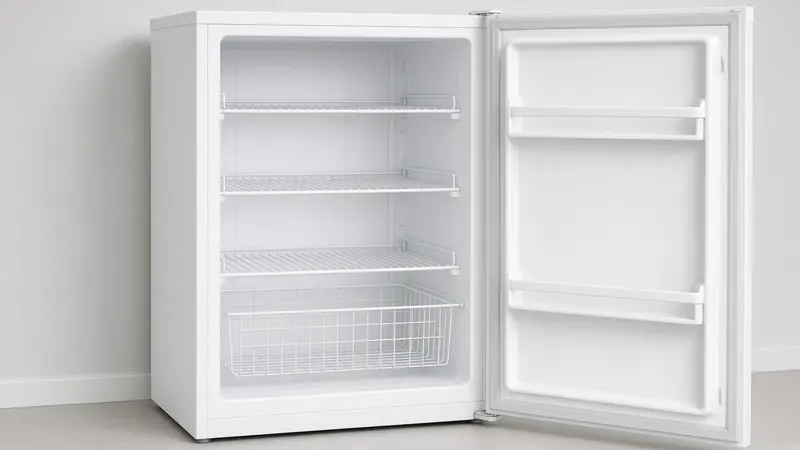
Upright freezer, deep freezer, or a combo
An upright freezer not freezing often starts at the door. A package, a basket, or a torn gasket holds the seal off the frame, and the cabinet never catches up. Close a dollar bill in the gasket at several heights. It should drag. Look for frost only in one corner and a warm spot opposite it, which is a fan or a blocked vent inside, not a reason to open the sealed system.
A deep freezer not freezing is usually a chest with a lid. Cold spills out each time the lid stays up, and a lid gasket full of crumbs does the same job more slowly. Many chest cabinets shed heat through the outer skin. The manual prints a gap to the wall. A chest shoved tight into an alcove runs warm even when the compressor is working. Do not punch a hole for a drain, and do not chip ice off the liner. If the manual shows a defrost drain plug, use only that plug, and only as that page describes.
When the freezer shares a refrigerator
If the fresh-food section is also warm, treat the whole cabinet. The checks for airflow, coils, and a 24-hour pull-down on a new refrigerator are in the refrigerator not cooling guide. If only the freezer compartment is soft and the fridge is at or below 40°F, stay here. A frost sheet on the freezer's rear panel can block the evaporator while the fridge still feels acceptable for a while.
LG documents its own freezer behavior, including models that ice the evaporator. Those notes live in the LG freezer not freezing guide. Do not copy an LG linear-compressor serial check onto a chest freezer from another maker. Brand pages exist so the shared temperature rules stay short and the maker-specific stop rules stay accurate.
One defrost test, then a decision
A thick frost layer that returns is a defrost problem. One manual defrost is only a test: unplug, empty the food into a cooler, leave the door or lid open, and lay towels down for several hours. Do not chip ice and do not use a heat gun. If the freezer then holds 0°F and the frost returns within a few days, stop. A qualified technician takes the defrost circuit from there. Repeating the melt every weekend hides a fault and risks a punctured liner.
A freezer that was just filled with warm food, or a new freezer on its first day, can sit above 0°F for hours. Leave the door closed. A new refrigerator or freezer can take up to 24 hours to reach the set temperature. Judge it after that window, not after the first grocery load.
| What you notice | Likely cause | Safe check |
|---|---|---|
| Ice cream soft, thermometer roughly 15°F to 32°F | Cold, but not holding 0°F | Confirm the control setting in the manual and retest with the door shut |
| Upright door, bill slides out with no drag | Gasket or a package holding the door open | Clear the strike and clean the gasket. Replace a torn gasket for that model |
| Chest or deep freezer tight against the wall | Cabinet cannot shed heat | Restore the clearance the manual prints. Do not add refrigerant |
| Frost sheet on the rear panel, food soft | Air path or defrost | One unplug-and-thaw test. Stop if the frost returns |
| New unit or a huge warm load, reading high for a few hours | Pull-down still in progress | Keep the door closed. Allow up to 24 hours on a new cabinet |
| Both fridge and freezer warm | Whole-cabinet cooling fault | Use the refrigerator not cooling guide, then return if only the freezer stays soft |
Checks ordered by the thermometer
Measure between packages
Place an appliance thermometer in the center of the load, not in the door. Shut the lid or door for several hours. Write the number down. At 0°F the freezer is doing its job even if the outer door feels only cool. Above 0°F, keep going.
Name the cabinet
Upright, chest, or the freezer half of a refrigerator. Read the control section in that manual. Do not turn a numbered dial to a position you saw on a different brand. Set the temperature the manual calls 0°F or the coldest food-storage mark it actually defines.
Check the seal and the load
On an upright, look for a package in the door strike and do the bill test. On a chest, check the lid gasket and how long the lid has been open. A deep freezer that is opened every few minutes will not show 0°F on the next glance.
Give the outside of the box room
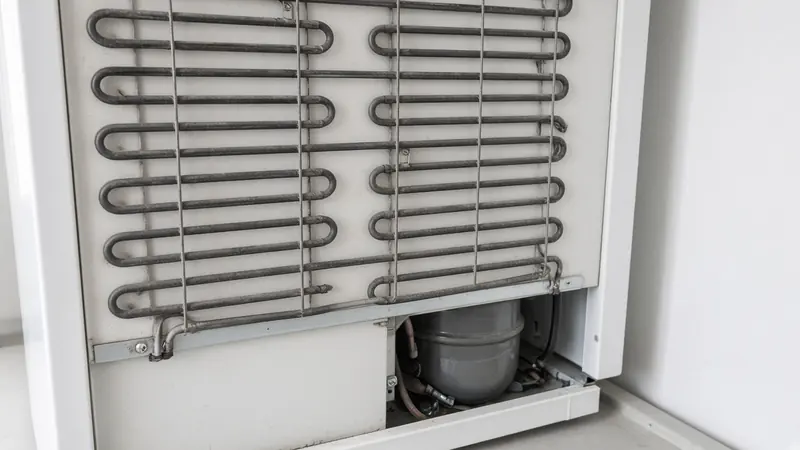
Unplug before you move the cabinet. Restore the wall gap the manual prints. Vacuum dust only from surfaces the manual says are safe to reach. Do not remove a cover over refrigerant lines.
Defrost once if you can see a frost sheet
Unplug, empty, doors or lid open, towels down, several hours. Start the unit and remeasure the next day. Frost that comes back is the end of the home test.
Protect the food and stop
Move food to a cooler if the reading will not reach 0°F. Do not add refrigerant and do not open the sealed system. If the ice maker has also stopped, fix the temperature first, then use the ice-maker checks.
When 0°F comes back
Recheck the thermometer the next morning with the door still closed. A single good reading after a defrost, followed by soft food two days later, means the test failed even if the first morning looked fine. That is the stop point. If the reading holds at 0°F, look at the ice maker only if it is still idle. Cubes are a result of temperature, water, and a switch, in that order.
Cabinet guides are grouped in the refrigerator and freezer section. Gasket and coil care is listed under maintenance and cleaning. Once the freezer holds 0°F and you still have no cubes, use the ice maker not working guide.
Questions readers ask
How cold is cold enough for a freezer?
The FDA's storage target for a freezer is 0°F. Food can feel firm a little warmer than that and still be in a poor place for long storage. Ice cream that is soft, or meat that is not hard, usually means the cabinet is well above 0°F. Use an appliance thermometer between packages. The temperature in the door is the warmest spot and will mislead you after the door has been open.
What if the refrigerator is warm too?
Then you may not have a freezer-only fault. A shared cabinet that is warm on both sides belongs in the refrigerator not cooling guide. If the fresh-food section is fine and only the freezer is soft, stay on this page and check the door gasket, a package holding the door open, and frost on the freezer panel. LG's own freezer notes are in the LG freezer guide, and they are not a script for every brand.
Can I scrape the frost off the back wall?
No. Do not chip ice and do not use a heat gun. One manual defrost is a test: unplug, move the food to a cooler, leave the door or lid open, and lay towels down for several hours. If the freezer reaches 0°F afterward and the frost sheet returns within a few days, stop. A qualified technician has to test the defrost circuit. Scraping the panel can puncture a line.
Does a chest freezer fail the same way as an upright?
The temperature target is the same. The leak path is not. An upright loses cold every time a tired gasket or a protruding package holds the door off the frame. A chest or deep freezer loses cold through the lid seal and also runs warm if the cabinet is shoved against a wall with no gap for heat to leave. Read the clearance in that model's manual. Do not assume the coils are in the same place on both styles.
Will a warm freezer stop the ice maker?
Yes. An ice maker needs a freezer at 0°F, plus water and a maker that is switched on. Cubes that never drop are often the first sign the cabinet is above 0°F. Fix the temperature before you replace a water filter or an ice-maker module. The ice maker guide covers the water and switch checks once the thermometer reads 0°F.