On this page
A dryer taking too long to dry still tumbles, and the clothes are warm or hot by the end, but the cycle runs on and the load is damp. A dryer takes forever to dry, a dryer takes forever to dry clothes, my dryer takes forever to dry clothes, and my dryer takes forever to dry are that complaint. A dryer gets hot but takes forever to dry clothes is airflow. Heat is arriving. Moist air is not leaving. A new dryer takes forever to dry often has a crushed transition duct or a vent the installer left too long. The length and the hood are in the install guide, not in a guess.
A drum that turns and stays cold is dryer not heating. A drum that will not turn is dryer won't start or, if it heats anyway, dryer not spinning but heating. Unplug a dryer that heats without tumbling.
Lint screen, then the duct you can reach
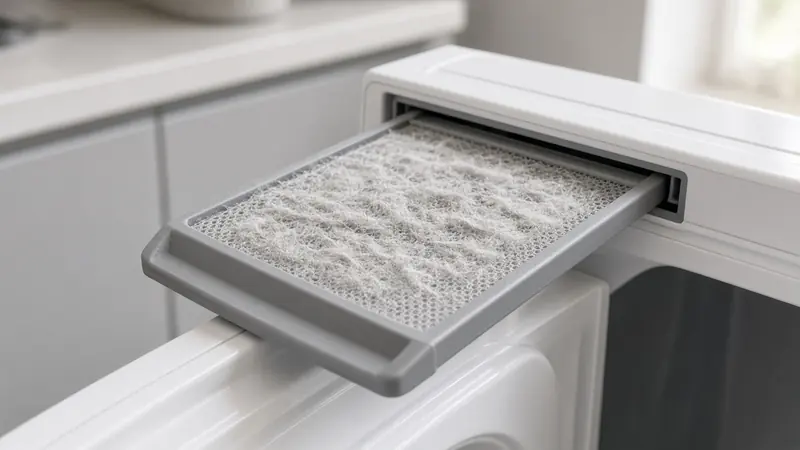
The U.S. Consumer Product Safety Commission tells owners to clean the lint screen after every load and to keep the duct and the outdoor hood clear. Pull the screen, wash it if the manual says a film from dryer sheets can block it, and dry it before it goes back. Then use how to clean a dryer vent for the hose and the hood you can reach without a ladder on the roof. Do not blow lint into the laundry room and call the vent clean. Do not disconnect the duct and run the dryer to "test" it. That dumps lint and heat into the house.
Load size and a fuse you do not jump
A drum packed solid cannot tumble air through the clothes. Split the load. Mixed rubber-backed mats and a towel can also run long. Follow the fabric notes in the manual. A thermal fuse that has opened usually stops heat entirely, which is the not-heating guide, not a long cycle. Do not bypass a thermal fuse or a high-limit thermostat. Replacing a fuse without clearing the vent burns the new fuse and can start a fire.
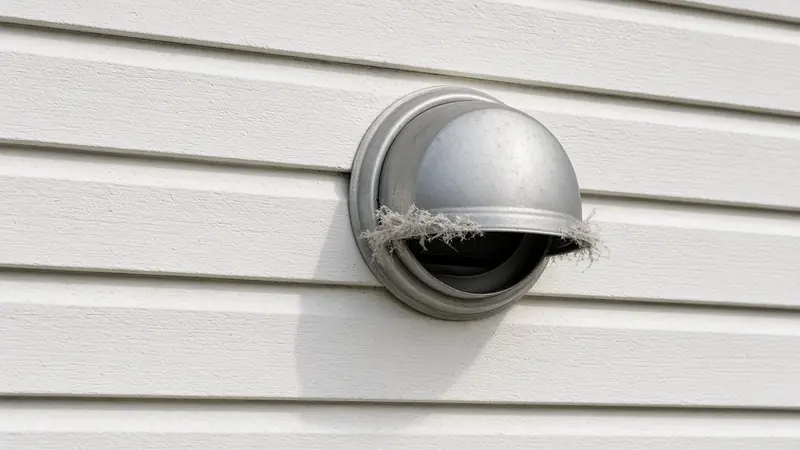
If the outdoor hood flaps are stuck and you cannot see them without going onto the roof, stop. Roof work is not this page. A squeak while the long cycle runs is a separate check in dryer squeaking, after the dryer is unplugged.
| What you see | Likely cause | Safe check |
|---|---|---|
| Clothes hot and still damp after a long cycle | Airflow | Lint screen, then the vent you can reach |
| Clothes cold the whole time | No heat | Use the not-heating guide. Do not treat it as a long cycle |
| New dryer, vinyl duct crushed flat | Install duct | Use the duct type and length in the install guide |
| Drum packed solid | No room for air | Split the load |
| Smell of gas | Leave | Call the gas utility. Do not adjust a valve |
Checks in order
Clean the lint screen
After every load, and wash it if the manual says residue is blocking it.
Clean the vent you can reach
Use the vent guide. Unplug the dryer first. Do not run it with the duct off.
Split an oversized load
The drum needs room to tumble. Follow the manual's load notes.
Look at the transition duct
A crushed section stays crushed. Replace it with the type the install guide allows. Do not add extra length to hide a kink.
Stop at the roof and the fuse
Do not climb. Do not bypass a thermal fuse. If the duct is clear and a normal load still runs forever, hire a technician.
Questions readers ask
My dryer takes forever to dry clothes, but they come out hot. Is the heater broken?
Heat is present. The usual cause is air that cannot leave: the lint screen or the vent. A heater that has failed leaves clothes cold. That is the not-heating guide.
The dryer is new and already takes forever. Did the heating element fail?
A new dryer takes forever to dry most often because the transition duct is crushed or the vent run is longer than the install guide allows. Check those before you assume a part failed.
Can I disconnect the vent and dry one load to test it?
No. That blows lint and moist heat into the room, and it is not a repair. Clean the duct, then reconnect it before you start the dryer.
Should I replace the thermal fuse because cycles are long?
No. A long hot cycle is not an open fuse. Bypassing a fuse, or replacing one without clearing the vent, is a fire risk. Clean the airflow path first.