On this page
A squeak that repeats every time the drum turns is the fault. A single thump from a sneaker or one clunk from a zipper is not. Write down the timing before you name a part: only as the drum starts, through the whole cycle, gone after a few minutes, or only on some loads. That note is what a technician can use. The cabinet stays closed while you make it. A small load of shirts is enough to hear it, so a heavy wet towel is not required. Emptying the lint screen does not answer the noise. Start with the plug, not with a panel.
Why is my dryer squeaking, why is my dryer squeaking loudly, and why is my dryer making a squeaking noise are the same timing question. A dryer making squeaking noise, a dryer is squeaking, my dryer is squeaking, and dryer squeaking loudly all mean the sound repeats as the drum turns.
Unplug before you move anything
This is a fire-risk appliance. Pull the plug before you slide the cabinet or put a hand in the drum. If you cannot reach the plug, switch off the breaker and leave it off until the dryer is back in place. Do not spin the drum, the blower, or any other moving part while the dryer is plugged in. With the plug out and the door opening cool, you may turn the drum by hand to feel whether it turns freely or grinds. Do not force it. Do not prop the door and start a cycle to watch.
If the cabinet is hot and the drum is not turning, unplug it immediately. Heat without tumbling can scorch clothes and lint. That pattern is covered in dryer not spinning but heating. Do not start another cycle to see if the drum catches. A drum that heats and does not turn is not the same fault as a drum that turns and squeaks.
Gas smell is a stop, not a squeak. If you smell gas, leave the house and call the gas utility from outside. Do not flip switches on the way out, and do not turn a gas valve. Stop before any gas valve on a gas dryer even when you do not smell gas. Leveling and lint checks do not include the gas supply. If sliding a gas dryer would stress the gas connector, stop and hire a technician. Electric dryers have no gas valve. Both kinds get unplugged before they are moved.
What you can check with the cabinet closed
How to stop dryer from squeaking at home is a short list. Level the feet so the cabinet does not rock. Clean the lint screen. With the plug out, remove a coin or a button from the drum or from the felt at the door opening that you can see. How to fix a squeaking dryer from a general article ends at that list. Rollers, a belt, an idler, and drum glides are behind the panels.
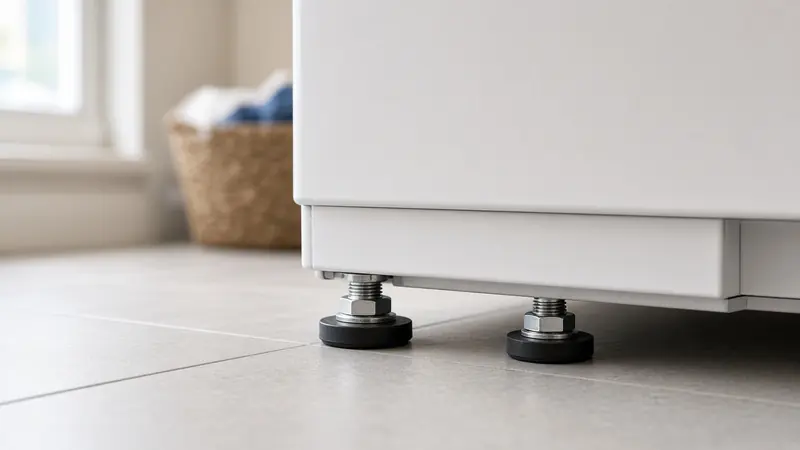
A dryer that rocks when you push a top corner can chirp as the shell shifts. Unplug first, then try the corners. Turn the leveling feet until the cabinet sits without rock. A small level on top helps, if you have one. Do not lift the dryer onto its side, and do not stack shims in a way that lets a foot walk off them. If the floor itself is soft or badly sloped, say so when you call. Feet will not straighten a failed joist.
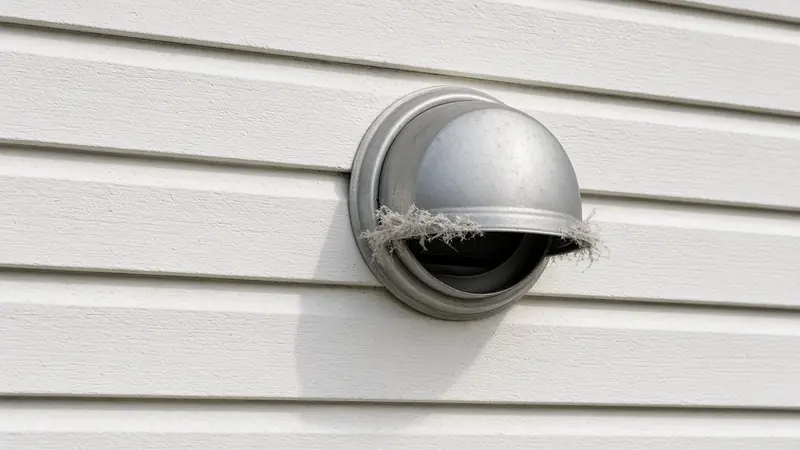
The U.S. Consumer Product Safety Commission says to clean the lint screen every load and to keep the duct and the outdoor hood clear. Do that after this dryer is unplugged and cool. A packed screen is a fire hazard. It is rarely the squeak, and you still clean it. Guidance is on the CPSC clothes dryer page. Screen habits for the whole laundry room are in maintenance and cleaning. A dryer that tumbles and stays cold is a different problem, covered in dryer not heating.
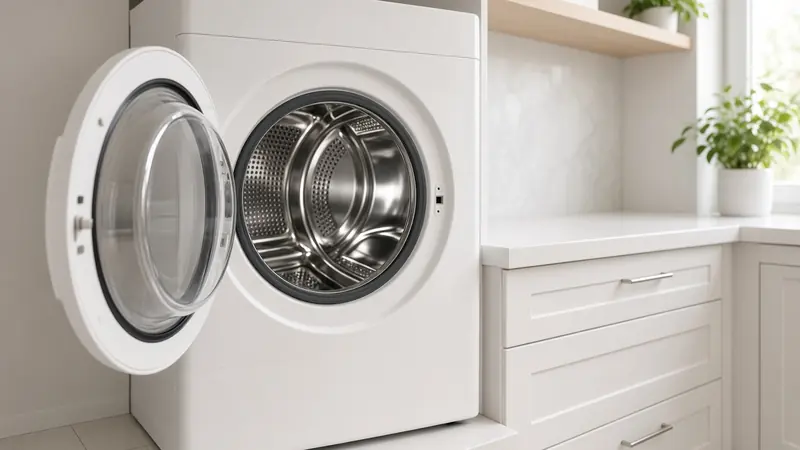
A coin, a button, and the felt you can see
With the plug out, look through the door. A coin or a button in the drum can tick or squeak as it rides the baffle. Pick it out. Along the door opening, many dryers have a felt band you can see without removing the door. A coin caught in that felt can squeak against the drum. Lift out what you can see. Do not peel the felt off, and do not replace drum glides. Glides, like the rollers, are technician work inside the cabinet.
Why is my front load dryer squeaking near that door opening? People look at the felt. The look is fair only with the dryer unplugged. If the felt is torn, frayed, or missing in a stretch you can see, write that down. Replacing it is not a step on this page if it means taking the front apart. Leave the panels on.
When the noise happens
Dryer squeaking when starting, then going quiet, is a grab as the drum gets moving. Dryer squeaking when running from the first tumble through the end of the cycle is a different note: the sound never leaves. Dryer squeaking while running is that full-cycle pattern, and it still does not tell you to oil a shaft. Lubricant sprayed into a dryer is a fire hazard. Do not oil the drum, the door, or anything inside the opening.
If dryer squeaking stops after a few minutes, the noise changed after the drum had been turning. Parts warm, a coin settles, or a support quiets. Write that timing on the note. It is not permission to remove a panel. A dryer squeaking noise comes and goes with load size or with a coin that moves. That is the intermittent case. Run one normal cycle only after the plug has been restored, the feet are set, the screen is clean, and nothing is caught in the opening. Listen. If the sound is gone, the coin or the rock was the cause. If it returns, unplug again and stop.
Parts inside the cabinet
Dryer drum squeaking is the household name for a noise that seems to come from the shell. The rollers that carry the drum, and the glides at the front, are inside. Dryer belt squeaking is a guess about the belt that wraps that shell. Dryer idler pulley squeaking is a guess about the pulley that keeps tension on the belt. You cannot see those parts with the cabinet closed, and you should not open the cabinet to tell them apart. A qualified technician does that from the service manual for this model, with the dryer unplugged the whole time. This page does not include steps to change a belt, an idler, rollers, or drum glides.
Do not spray a solvent or a lubricant in to "quiet it for now." Do not bypass a door switch to make the drum turn with the door open. Other dryer symptoms are grouped under dryers. Use the no-heat guides only when the drum is turning and the air is cold. Use the no-spin guide only when heat is on and the drum is stopped, and unplug first.
| What you notice | Likely cause | Safe check |
|---|---|---|
| Chirp only in the first seconds | Something grabbing as the drum starts | Write "start only." Do not open the cabinet |
| Squeak the whole cycle | Support, belt, or idler inside the cabinet | Unplug. Technician work. No belt steps here |
| Noise fades after a few minutes | A part quiets as it warms, or a coin settles | Record the timing. Leave the panels on |
| Noise on some loads only | Load size, or an object that shifts | Unplug, then check the drum and the visible door felt |
| Cabinet rocks at a corner | Feet not sharing the floor | Unplug, then level the feet. Do not move a gas connector |
| Heat, drum not turning | Different fault, and a fire risk | Unplug immediately. See the no-spin guide |
| Gas odor | Possible gas leak | Leave and call the gas utility. Do not touch a gas valve |
Checks in order
If you smell gas, leave
Do not look for the squeak. Leave the house and call the gas utility from outside. Do not operate switches, and do not turn a gas valve. Stop before any gas valve even when you only planned to level the feet.
If it heats and does not tumble, unplug
Heat with a stopped drum is a fire risk. Pull the plug or switch off the breaker. Do not restart. Follow the guide for a dryer that heats and does not spin. A squeak article does not apply until the drum is turning again.
Unplug, then clean the lint screen
Clean the lint screen every load, as the CPSC directs, and do it with the dryer unplugged and cool. A full screen is a fire hazard whether or not it caused the noise.
Remove what you can see
With the plug still out, take a coin or a button out of the drum. Check the felt at the door opening that you can see. Do not peel the felt, and do not reach past it into the cabinet. Turn the drum by hand only while unplugged. If it will not move, do not force it.
Level the feet
Still unplugged, push the corners. If the cabinet rocks, adjust the feet until it sits steady. Do not tip the dryer onto its side. On a gas dryer, do not disconnect gas and do not turn the gas valve to make the slide easier.
One listening cycle, then stop
Plug in only after the cabinet is in place, the screen is in, and the opening is clear. Run one cycle and write down when the sound happens. If it continues, hire a technician for the rollers, belt, idler, or glides. Do not open the cabinet, and do not oil anything.
Questions readers ask
Should I oil the drum to quiet the sound?
No. Oil or another lubricant in a dryer is a fire hazard. The squeak may be a coin, a cabinet that rocks, or a support inside the cabinet. Oiling the opening does not fix those, and it adds fuel near a heat source. Unplug, remove what you can see, level the feet, and clean the lint screen. If the sound remains, hire a technician. Do not open the cabinet to reach a shaft.
The noise is only at the beginning of the cycle. Can I ignore it?
Write it down as start-only, and still do the unplugged checks: lint screen, a coin or button, and feet that do not rock. A sound that quits after the drum is moving can be a support that grabs and then releases. It can also be an object that settles. If it gets louder, or the drum stops while heat stays on, unplug and call. Do not take the front off to watch the start.
What if the sound disappears after a few minutes?
Record that it fades, and whether that happens on an empty drum and on a full load. Warm parts and a shifting coin both can quiet down. The fade is not a test that proves the belt or the idler is fine, and it is not a reason to open the cabinet. If the noise later stays for the whole cycle, stop using shortcuts and hire a technician.
Is a front-door dryer different from a stack?
The door felt you can see is easier to inspect on a dryer with the door on the front, and you still do that only with the plug out. Stacked pairs are heavier to move. Unplug before any move, and on gas do not turn a gas valve to slide the stack. Rollers, the belt, and the idler stay inside the cabinet on both layouts. Do not open either cabinet from this page.
The drum will not turn, and the cabinet is hot. Is that a squeak?
No. Unplug immediately. Heat with no tumble is a fire risk, not a noise to study. Do not restart to hear whether it squeaks once the drum catches. Use the guide for a dryer that heats and does not spin, and leave the plug out until a qualified technician has it. If you also smell gas, leave and call the gas utility.