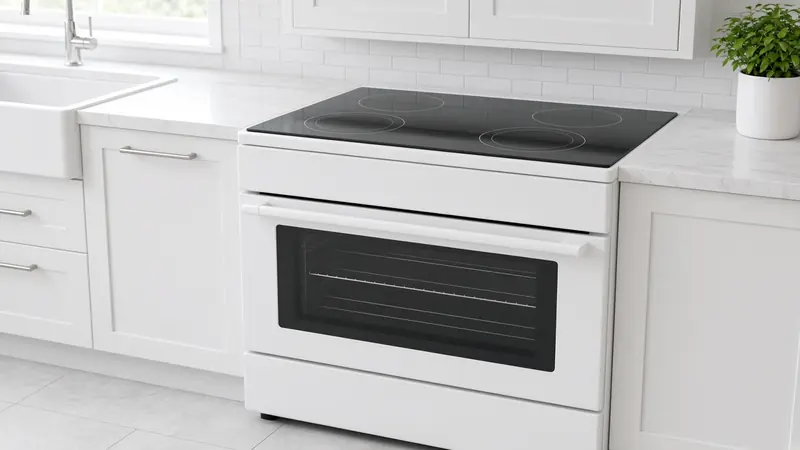
An electric range, from the control panel down. A gas smell is a reason to leave the kitchen, not a part to remove.
- Control panel. The switches or the touch panel at the back.
- Cooktop. The top surface. On a glass top, it is the black glass.
- Oven door. The front door. Leave it on the oven.
- Rack. A shelf inside the cavity.
- Oven cavity. The box where the food bakes.
On this page
Can you put parchment paper in the oven is a yes for Reynolds Kitchens parchment, with a temperature cap and a placement rule. Reynolds says that paper is oven-safe up to 425°F, that you should preheat first, and that the paper must not touch an open flame, a broiler, or a toaster oven. The baking-tips page adds the sides and bottom of the oven to the do-not-touch list. Is parchment paper oven safe is that set of limits, not a permission to line the oven itself.
425°F is Reynolds Kitchens parchment, including the unbleached roll Reynolds rates the same way. If your box prints a lower number, or prints no number, do not borrow 425°F from this page. The box in the drawer is the limit for that paper.
Where the sheet is allowed to sit
| Placement | Reynolds |
|---|---|
| On a pan, under cookies or a bake, at or below the box limit | This is the intended use |
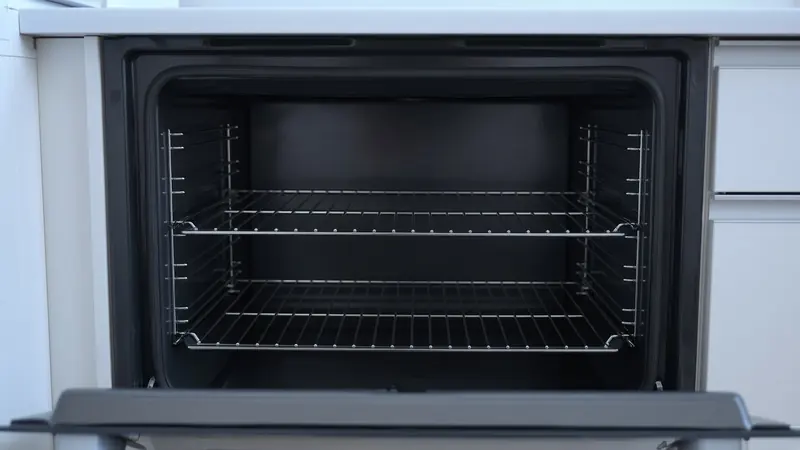
| Touching the oven wall, the oven floor, or a heating element | Do not. Trim the sheet so it stays inside the pan |
| Broil | Do not. Reynolds says broiler heat can run past 500°F, above the paper's rating |
| Toaster oven | Do not, on Reynolds' parchment pages |
| Open flame or a gas burner | Do not |
Read the box
Find the oven temperature printed for that roll. Stop at that number. Preheat before the pan goes in, which is Reynolds' order.
Cut it to the pan
The sheet should lie under the food and inside the pan. Corners that climb the oven wall are the failure Reynolds is warning about.
Bake, do not broil
If the dial says broil, take the paper off. The food can go under the broiler on the bare pan, or you can choose a different finish. The paper does not go with it.
If it darkens or smokes, turn the oven off
Leave the door closed so a draft does not feed the paper. When the oven is cool enough to open, lift the pan out. Do not pull burning paper through the kitchen. A paper fire is a reason to stop cooking, not to finish the cookies.
Wax paper is not parchment
Reynolds' comparison says wax paper has a paraffin coating and should not be exposed directly to oven heat. It can line a cake, bread, or muffin pan only when the batter completely covers the paper. Cookies and anything else that leaves the paper in the heat will melt the wax. Reynolds also says both of its papers are microwave-safe, and only the parchment is oven-safe up to 425°F. A microwave question is not this bake. Do not swap the sheets because they are both pale.
An oven cooking bag is a third product. USDA describes heat-resistant nylon oven bags, used in a conventional oven set no higher than 400°F. That is not parchment, and 400°F on a nylon bag is not a new limit for your paper roll.
When the oven itself is the problem
Parchment does not fix an oven that will not hold the temperature you set. If the cavity stays cold, or you smell gas, leave the paper question and use oven not heating up. Gas odor means leave the kitchen. A glass cooktop is a different surface from the oven cavity: how to clean a glass stove top. Do not set a parchment-lined pan on a burner.
Other oven limits are under ovens and stoves.
Questions readers ask
Is 450°F fine if Reynolds says 425°F?
Not for Reynolds Kitchens parchment. Their pages cap a conventional oven at 425°F. A different brand must show its own number. This page will not round 425 up.
Can I put parchment paper in the oven under the broiler for a minute?
No. Reynolds says not to use parchment with a broiler. The paper comes off before broil.
Can the paper touch the rack if the pan is small?
Keep it on the pan. Reynolds says not to let it touch the oven walls, the bottom, the element, or flame. Trim it.
Wax paper is all I have. Can it bake cookies?
No. Reynolds says wax paper melts when the sheet is exposed to oven heat. It is only a liner when batter covers it completely, as in a cake. It is not a cookie-sheet liner.