On this page
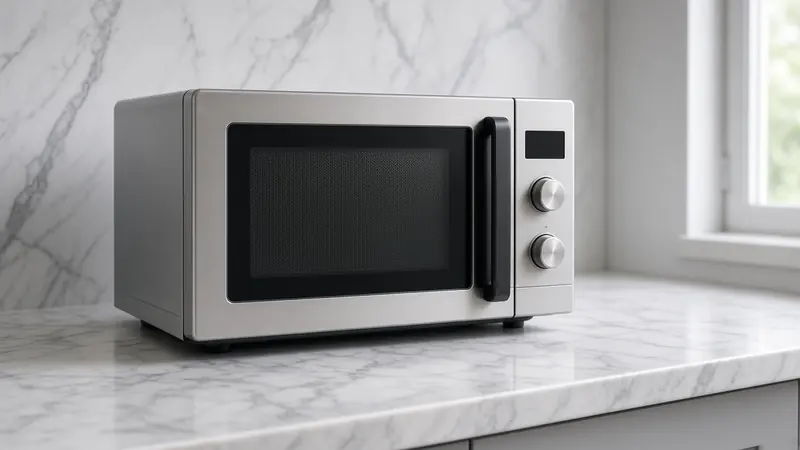
How to clean microwave splatters is the inside you can see with the door open. How to clean a microwave that smells like last night's sauce is the same cavity, plus the turntable and the plastic ring under it. Nothing in this job uses a screwdriver on the outer wrap.
Steam, then wipe
Put a microwave-safe bowl of water in the center. A wooden skewer or a lemon slice is optional. Heat on high until the window clouds, usually a few minutes. Let it stand closed for a minute so the film softens. Then unplug the oven, or switch off the breaker if the plug is behind the cabinet and you cannot reach it without pulling the unit onto yourself. Wipe with a soft cloth. If the manual names a mild dish soap, use a drop on the cloth, not a puddle in the waveguide cover. That thin panel on the cavity wall is not a filter to peel off.
Lift the turntable and the ring. Wash them in the sink. Dry the hub before you put the plate back. A wet hub that sits crooked will thump, and it is not a magnetron symptom.
What not to use
Do not run the microwave with nothing in it to "burn off" a smell. Empty operation reflects energy into the oven. Do not put metal, foil, or a scouring pad inside and start it. Do not spray a heavy oven cleaner into the door vents. The mesh in the door is a shield. Scrubbing it with an abrasive can damage the seal you should not be testing.
The outer cabinet is a cover, not a service panel for owners. Do not remove it to vacuum dust. The capacitor inside can hold a lethal charge after the cord is out. That warning is the whole point of microwave not heating. Cleaning does not include discharging anything.
When it is not dirt
Sparks from a splatter are sometimes food on the waveguide cover. If a wipe, with the oven unplugged, removes a burnt spot and the next cup of water heats quietly, you are done. If it sparks again, or the food stays cold while the light and fan run, unplug and stop. Do not keep starting it to watch. A garbage disposal under the same counter is a different machine. Its reset button is in garbage disposal not working.
| What you see | Likely cause | What to do |
|---|---|---|
| Sauce on the ceiling | A boil-over | Steam, unplug, wipe |
| Sour smell | Old spills in the seams | Steam and the turntable wash. No cabinet |
| One spark, then quiet | A crumb on the cover | Unplug and wipe. Stop if it returns |
| Fan runs, food stays cold | Not a cleaning fault | Unplug. Use the not-heating guide |
| Door mesh looks burned | Damage, not film | Stop using it. Do not sand the mesh |
Checks in order
Heat a bowl of water
Use a microwave-safe bowl. Do not run the oven empty. Stop the cycle when the window clouds.
Unplug, then wipe
Cloth only. Leave the waveguide cover in place. Do not remove the outer wrap.
Wash the turntable
Plate and ring, then dry the center hub before it goes back.
One cup of water as a test
It should get hot without sparks. If the fan runs and the water stays cold, unplug and switch to the not-heating guide.
Questions readers ask
Can I use a magic eraser or steel wool on the cavity?
No. Abrasives scratch the coating and can damage the door mesh. Steam and a soft cloth are the clean. If a spot will not lift, leave it. Sanding is not a fix, and it is not safe near the door seal.
The microwave still smells after a steam cycle. Should I take the case off?
No. Repeat the steam once, wash the turntable, and wipe the door gasket you can see. Odors in the fan path are not a reason to remove the outer cover. The capacitor behind that cover is the hazard. If the smell is burning plastic while it runs, unplug it and stop using it.
Is an over-the-range microwave cleaned the same way?
The cavity, the door, and the turntable are the same, and the cabinet still stays on. Grease filters under the hood, when the manual shows them as removable, wash in the sink. Do not remove the unit from the wall to clean it, and do not open the top.
It runs and the light is on, but the water never warms. Will cleaning help?
No. That pattern is a heating failure, often in the high-voltage section. Unplug the oven. Do not remove the cover and do not keep testing it. Follow the microwave not heating guide, which stops at the same line: no capacitor work at home.