On this page
How to clean dryer vent lint is a fire job, not a parts job. The U.S. Consumer Product Safety Commission tells owners to clean the lint screen after loads and to keep the exhaust path clear. Dryer vent duct cleaning at home is the screen, the hood you can reach from the ground, and the short piece behind the cabinet. Dryer vent replacement of a crushed foil transition is the same visit only when you can do it with the plug out and without touching gas. A long duct inside a wall is not a weekend project from a blog.
How to clean a dryer before you touch the duct
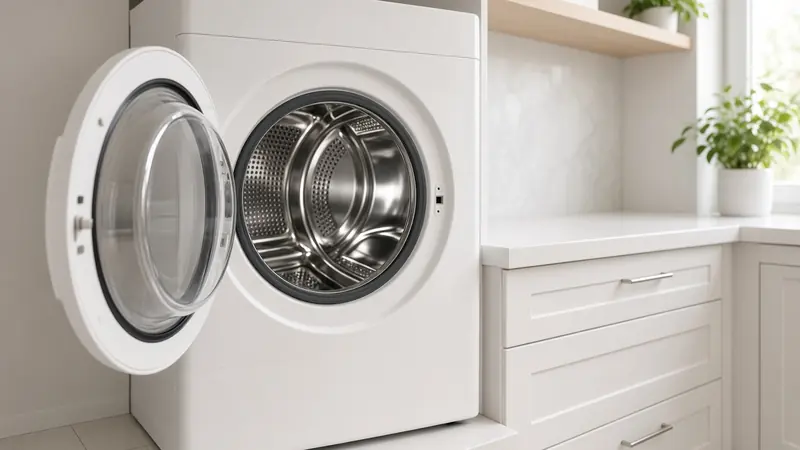
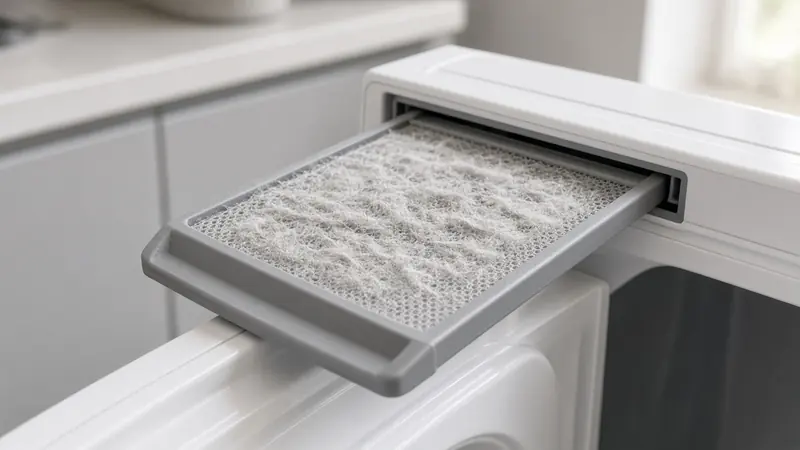
How to clean a dryer, the machine itself, is the lint screen and the drum opening you can see. Pull the screen. Roll the lint off. Wipe the slot the screen sits in if the manual shows that slot as user-accessible. Do not vacuum inside the cabinet. How to clean a dryer? also means the moisture sensor strips inside the door on many models: a dry cloth, power off, no sandpaper. Sanding the strips ruins the sensor.
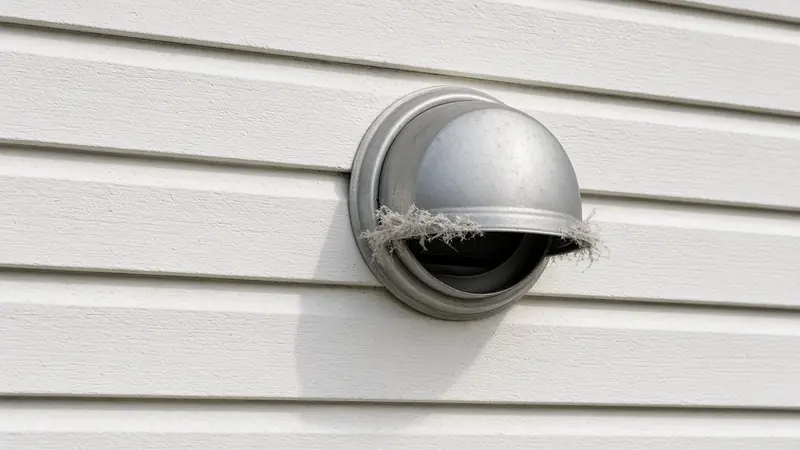
Empty the drum. A sock left in the baffle is not a vent problem. Then go outside. The hood flap should swing when the dryer runs a short air-fluff or no-heat tumble, and it should fall closed when the dryer stops. If you cannot see the hood without a ladder, stop. Dryer exhaust repair on a second-story wall is not a household reach.
The short duct
Unplug the dryer. If you cannot reach the plug, switch the breaker off and leave it off. On gas, do not turn the shutoff and do not disconnect the gas flex to pull the cabinet farther. If the cabinet will not come forward without stressing that connector, stop.
Dryer duct repair you can see is a crushed, kinked, or foil transition between the dryer and the wall. Plastic foil duct sags and holds lint. Rigid or semi-rigid metal is what install guides usually call for. If you replace that short piece, match the length so it does not kink when the dryer rolls back. Clamp both ends. Do not screw through the duct in a way that snags lint, if the fitting is a clamp style. Push the dryer back without flattening the new piece.
Dryer vent line installation through a crawlspace, a roof jack, or a new hole in the siding is construction. Dryer duct replacement of that hidden run is the same limit. This page does not include cutting siding or working on a roof.
When the vent is clear and the clothes are still damp
Dryer not drying after a clean screen and a moving hood is no longer a cleaning article. If the air at the door stays cold on a heated cycle, use dryer not heating. An LG panel that shows Flow Sense or d80 is the same airflow family, confirmed in that model's manual, and the brand page is LG dryer not heating. Do not replace a thermal fuse until the duct is actually clear. A new fuse on a blocked hood opens again.
| What you see | Likely cause | Safe check |
|---|---|---|
| Thick lint on the screen | Normal use, screen overdue | Clean it every load |
| Hood flap stuck shut | Lint or a painted hinge | Only if you can reach it from the ground |
| Foil duct crushed flat | The dryer was pushed too far | Unplug. Replace the short metal transition. No gas work |
| Long dry times, warm air | A restricted duct | Screen and reachable hood. Stop at the wall |
| Drum turns, air stays cold | Heat supply, not lint alone | Switch to the no-heat guide |
| Gas odor | Possible leak | Leave. Call the gas utility. Do not turn a valve |
Checks in order
Clean the lint screen
Do this every load, with the dryer off. The CPSC page on clothes dryers is the fire reference: CPSC clothes dryer safety.
Look at the outdoor hood from the ground
The flap should move. If the hood is out of reach, hire the cleaning. Do not use the roof.
Unplug, then look at the short duct
Power off before you pull the cabinet. Leave gas connected. Replace only a crushed transition you can see.
Roll the dryer back without kinking the duct
A new piece that is too long will flatten again. One gentle push.
One heated cycle as a test
If the air stays cold, stop cleaning and open the no-heat guide. If you smell gas, leave.
Questions readers ask
Can I disconnect the duct and run the dryer to blow the lint into the laundry room?
No. That fills the room with lint and does not clean the duct inside the wall. It also runs a heater with the exhaust open in the house. Unplug, clean the screen, and inspect only the short piece you can see. Hire the hidden run.
The hood is on the roof. Is a ladder enough?
Not from this guide. Roof work is how people fall, and a roof jack is not the same as a wall hood you can touch from the yard. Hire someone equipped for that height. Clean the lint screen while you wait. The screen still matters.
Should I replace the whole vent if dry times got longer?
Start with the screen and a hood flap that moves. A crushed transition behind the dryer is a short replacement after you unplug. A duct buried in a wall or a ceiling is a different job. Longer dry times with cold air, after the reachable vent is clear, belong in the no-heat guide, not another section of pipe.
Is a gas dryer cleaned the same way?
The lint screen and the reachable hood are the same. You do not unhook gas, and you do not turn the gas valve to roll the cabinet. If the gas connector is too short to move the dryer a few inches, stop. Electric dryers have a plug to pull. Both stay closed. No cabinet panels.