On this page
A garbage disposal not working leaves scraps in the sink and is often blamed on a burned motor. In a lot of U.S. kitchens the motor is fine. Power never reached it, the overload reset opened, or a jam is holding the shredder still. Sort those three before you buy a replacement. Keep your hands out of the drain the entire time.
Why is my garbage disposal not working
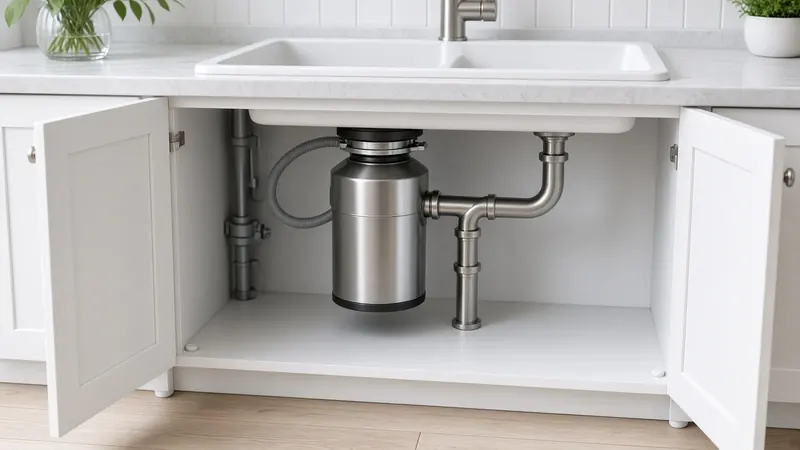
Why is my garbage disposal not working is answered first by the sound. A steady hum means the motor has power and cannot turn. Silence means power is missing, the reset is open, or the motor has failed. A short buzz that dies is the overload protector opening. Turn the switch off. Holding it on will not grind through a jam. My garbage disposal is not working after a heavy meal is often peels, bones, or grease. A failure with an empty chamber is more often the reset, the switch, or a dead outlet.
What kind of disposal you have
Many continuous-feed units run from a wall switch. Some are batch-feed and run only when the stopper is dropped in and turned to the position the manual calls run. If your sink has no switch, do not go looking for a hidden button on the motor. Read the stopper diagram in the manual. A stopper left in the seal position will make a healthy batch-feed unit look dead.
A sink garbage disposal not working may plug into a switched outlet or be hard-wired through the switch. If you see a plug, the lamp test below is fair. If you see only a cable, leave the wiring to an electrician.
The switch, the GFCI, and the outlet
A kitchen garbage disposal not working still needs a live source. Start with the switch off. Look for a GFCI under the sink or on the backsplash. Reset it once if it has tripped. If it trips again the moment you try the disposal, stop and have an electrician find the ground fault. Do not keep resetting it.
A garbage disposal switch not working feels like a dead grinder when the motor is fine. On a plug-in unit, substitute a lamp and flip the switch. A dark lamp means the switch, GFCI, or breaker is at fault. Replacing a switch is work for an electrician if you are not qualified.
InSinkErator reset and the hex socket
An insinkerator garbage disposal not working often recovers from the reset button on the bottom of the motor housing. InSinkErator documents that button and a 1/4-inch hex socket in the bottom center for freeing a jam. Power off first. Press the reset. With power still off, work a 1/4-inch hex key back and forth until the shredder turns freely, then remove the key. Diagrams are on the InSinkErator support site. If your manual shows no hex socket, do not drill the housing. Other brands use a different jam method.
Badger units
A badger garbage disposal not working uses that same style of bottom reset and 1/4-inch jam socket on current Badger units, because Badger is an InSinkErator household line. Confirm it in the manual packed with your unit. Older units can differ. If the reset will not stay in, clear the jam, let the housing cool, and press once more. If it pops out immediately, stop.
Garbage disposal not working no sound
A garbage disposal not working no sound is a power or motor problem, not a typical jam. A jammed unit almost always hums. Silence points to the outlet, the GFCI, the switch, an open reset, or a failed motor. Press the reset even when you hear nothing. If the outlet is live, the reset stays in, and the unit is still silent, do not open the motor housing.
If you hear a hum and the food stays put, follow garbage disposal humming but not working instead of leaning on the switch. A hum that continues will trip the overload again.
The dishwasher hose
Many disposals have a side inlet for the dishwasher. On a new disposal that inlet is sealed with a knockout plug. Until the plug is removed, the dishwasher cannot drain. Pulling that plug is plumbing work under the sink. If you do not do plumbing, stop and hire a plumber. Do not run the dishwasher again hoping the plug will blow out. Standing water on that path is covered in dishwasher not draining.
An older install usually has the plug already out. A sudden backup is more often a clogged hose or a stuck air gap. Keep grease, bones, and heavy fibrous peel out of the drain; the maintenance and cleaning notes cover that habit. Other countertop units are under small appliances. A microwave that lights and spins while food stays cold is a high-voltage fault. Leave that cover on.
| What you notice | Likely cause | Safe check |
|---|---|---|
| Silence when the switch is on | No power, open reset, or failed motor | Lamp test at the outlet, then the bottom reset |
| Steady hum, food does not move | Jam at the shredder | Power off, 1/4-inch hex key in the bottom socket if the manual shows one |
| Brief buzz, then nothing | Overload protector opened | Switch off, clear the jam, let the motor cool, reset once |
| No wall switch at all | Batch-feed stopper is not in the run position | Use the stopper positions printed in that model's manual |
| Dishwasher full of water, disposal itself runs | Knockout plug still in, or a clogged hose | Stop if you do not do plumbing |
| Reset pops back out, or a burnt smell | Seized or overheated motor | Leave power off and do not keep resetting |
Checks in order
Cut power
Turn the wall switch off. Unplug a corded unit or switch off the breaker for a hard-wired one. If water is on the cabinet floor, leave the outlet alone until the breaker is off.
Test the switch and GFCI
Reset a tripped GFCI once. On a plug-in unit, substitute a lamp and flip the switch. A dark lamp means you fix power first. A lamp that follows the switch means the feed is good and the fault is in the unit or a jam.
Look without reaching in
Use a flashlight and tongs for pits, glass, or a utensil you can see. Do not pass the splash guard with your hand. If the chamber looks clear and the unit still will not turn, go to the reset and the hex socket.
Press the reset
With power still off, press the button on the bottom of a current InSinkErator or Badger housing. Skip this if your manual shows no button. A button that will not stay in needs cool-down time and a free shredder.
Free the jam from the bottom
Still unplugged, turn a 1/4-inch hex key in the bottom socket only if the manual shows that socket. Rock it until the turn is easy, then pull the key out. If there is no socket, use the jam method in the manual or hire a technician.
Restore power and listen once
Run cold water and switch the unit on. A clean grind means you are done. A hum means power off and repeat the hex turn. Silence with a live outlet and a reset that stays in means the motor is finished. Do not open the housing.
Questions readers ask
Where is the reset button on a garbage disposal?
On current InSinkErator units, including current Badger models, the reset is a button on the bottom of the motor housing under the sink. Power has to be off before you press it. If the manual for your brand shows no bottom button, do not punch a hole looking for one. A button that will not stay in means the motor is still hot or still jammed. Cool it, free the jam, and try once more. If it trips immediately, stop.
Can I free a jam with a broom handle from the sink?
Do not lever the impeller from above, and do not put a hand in to guide a stick. InSinkErator documents a 1/4-inch hex socket on the bottom for this job, used only with power off. If your manual does not show that socket, use the method that manual does show. A wooden handle can slip off the impeller and drive your hand toward the ring. Tongs are for debris you can already see, not for turning the plate.
Why does the disposal hum and then click off?
The motor is powered and cannot turn, so the overload protector opens and the hum stops. That click is not a fix. Switch off, cut power, and clear the jam with the hex socket if your model has one. Let the housing cool before you press reset. Starting it again while it is still stuck repeats the trip and overheats the windings. If there is no hum at all, treat it as a power or motor fault instead.
Do Badger disposals use the same reset as other InSinkErator models?
Badger is an InSinkErator household line, and current Badger units use that same style of bottom reset and 1/4-inch jam socket. Confirm it in the manual that came with the unit, because older Badger models can differ. The model number on the plate under the sink is what you match. Do not assume a neighbor's diagram fits your year. If the plate is unreadable, a technician can identify the housing.
Should I replace a disposal that makes no sound?
Not until the outlet, the GFCI, the wall switch, and the reset have been checked. Silence with a dead outlet is an electrical problem. Silence with a live outlet, a reset that stays in, and a shredder that turns freely by hex key points to a failed motor. Do not open the motor to verify that. Batch-feed models with the stopper in the wrong position are also silent, so read that diagram before you replace anything.